Borer in Titirangi
Titirangi is the textbook bush-clad suburb, and Consumer NZ singles out bush-clad areas for one kind of borer. That is the reason for a separate page.
Borer is not a Titirangi invention, and most of the advice is the same as anywhere. One detail is not.
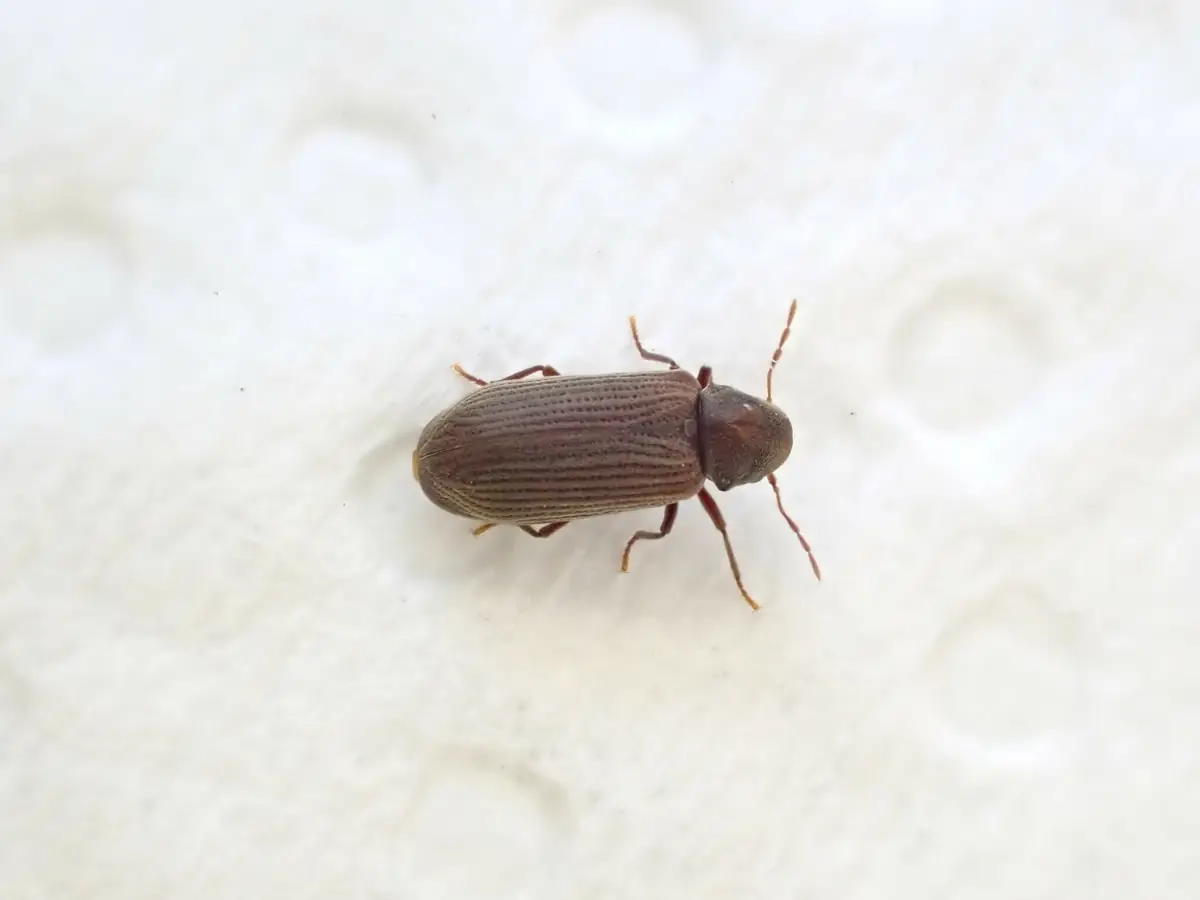
Consumer NZ says the most common of up to seven borer species is the common house borer, which likes moist untreated timber and is often found on the south side of buildings or in floor timbers because those areas are prone to damp. Adults fly for about a month between November and March, and larvae feed for up to four years. Two-tooth borer, which can last up to 11 years in wood, are more common in bush-clad areas.
Source: Consumer NZThat sentence about bush-clad areas is the one to hold on to. The council has a way of measuring bush.
How bush-clad Titirangi is
Of Titirangi's 1,378 ha, about 738 ha is in a Significant Ecological Area overlay and 34.5 km of permanent stream runs through it. A further 635 ha is zoned Large Lot residential, according to the council's base zone layer (measured 17 November 2026, boundaries generalised).
Source: Auckland Council open dataMore than half the suburb is in ecological overlay, and nearly half is large-lot housing. Houses sit inside bush, not next to it. That is the setting Consumer NZ describes. We are connecting two sources here and the link is our inference. Neither says Titirangi has more two-tooth borer than anywhere else, and we have no count.
Houses on poles
According to Wikipedia, some Titirangi houses were raised on poles so that they could be built in the bush without damaging tree roots, and the suburb had 14,856 residents in 5,148 dwellings in 2023. A house on poles on a slope under trees has:
- A shaded, ventilated-or-not underside. Light and airflow decide how damp the timber stays.
- Bearers and joists open to inspection, which makes borer easier to find than in a house with a closed concrete foundation.
- Cladding and decks close to the ground, where moisture lingers on a south-facing slope.
Our reading: a damp, shaded underfloor under tree canopy is exactly where Consumer NZ says common house borer is found, on the south side and in floor timbers. We have not surveyed Titirangi houses, so treat this as a reason to look and not a finding.
What to check in a bush-set house
- Flight holes in bearers, joists and floorboards. Check whether any are fresh, with clean edges and pale powder below.
- The south side of the building, where damp lingers.
- Posts and the point where they meet bearers. Moisture collects at joins.
- Timber that has been damp for years, such as under a leaking bathroom or a blocked drain.
- Ventilation. Blocked vents, soil piled against the house or plants touching the cladding keep timber wet.
Adults fly between November and March, so late spring and summer are when you may see beetles at windows or fresh holes. In winter the signs are older. Our page on borer holes in villa subfloors covers reading them, and the note on borer, damp and high rainfall near the ranges covers the damp side.
What an inspection does
A technician looks at the subfloor, roof space if relevant, and exposed timbers, probing and measuring the extent of the damage. A report says where activity is current, what is old and what treatment is suggested. The borer inspection page lays out the sequence. If treatment is needed it is usually applied to exposed timber, as covered on the subfloor treatment page. Products go on to label directions under the Hazardous Substances and New Organisms Act, and the safety page covers what is used under a house.
Larvae feed for up to four years, so a hole you find today may have been seeded years ago, and a house bought recently may already carry a population. For buyers, see pre-purchase borer checks.
Cost
We found only one published Auckland operator price for borer, from $199, which is a starting point and not a typical price. We could not verify published prices for inspection or subfloor work, so those are quoted after seeing the property. See the borer price page.
Is the bush the cause?
Consumer NZ says two-tooth borer are more common in bush-clad areas. That does not mean every bush house has it.
Does a ventilated subfloor stop borer?
It helps by keeping timber drier, which Consumer NZ identifies as a factor, but it does not remove existing borer.
Next step
The Titirangi suburb page covers the area, and the borer hub explains the options. For rodents under the same pole houses, see rats in Titirangi. Call 09 872 7624. An assistant takes your details for a specialist callback, or use the callback form.
Sources for this page
Where a source describes the place rather than pests, the pest relevance is our own reading.