Pest control in Kelston
A small suburb on the Whau, with thin evidence and plain advice.
Honest about what we know
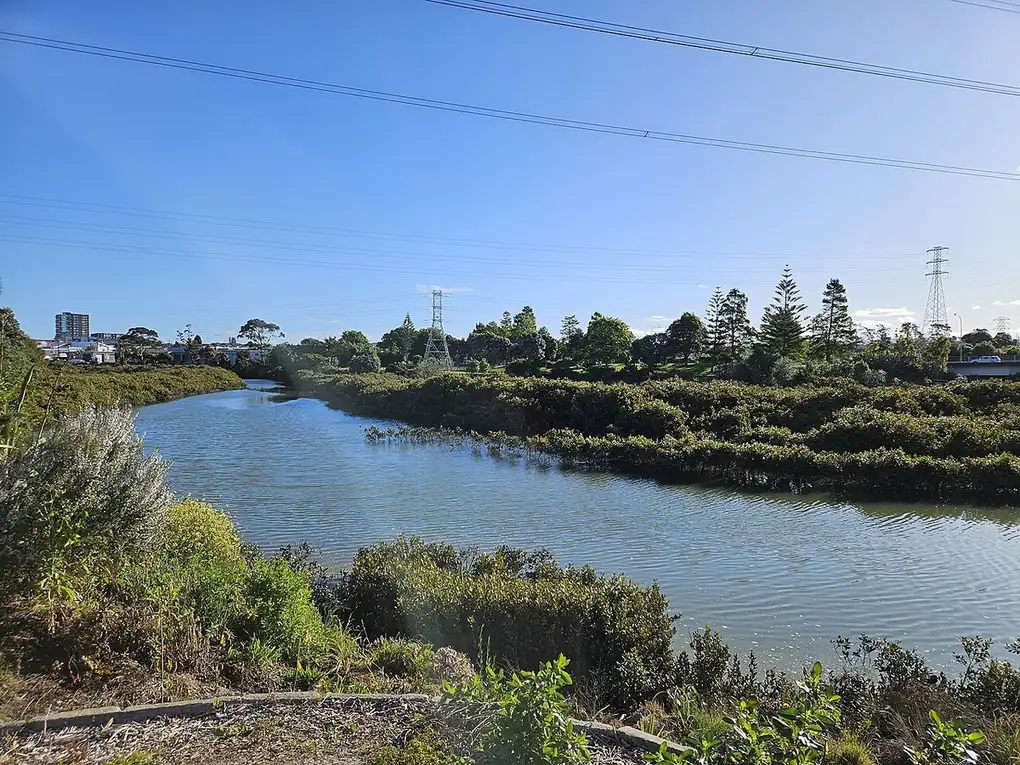
Kelston is a small suburb, and the published evidence about its pests is thin. We would rather say so than dress up a general paragraph as a local one. What we have is council map data and a catchment trust's statement, and both point the same way: rats along the river edge.
The shape of the place
Auckland Council open data, measured on 17 November 2026 inside a 167 ha boundary, shows 10 ha of mapped flood plain, 3 ha in a Significant Ecological Area overlay and 2.3 km of permanent stream.
Kelston's boundary is 49 ha Mixed Housing Suburban, 46 ha Mixed Housing Urban, 18 ha sport and active recreation and 14 ha Single House. No special-character overlay applies. Boundaries are generalised, so treat the figures as approximate.
Source: Auckland Council open data, flood plains and base zonesThat is not a bush suburb. There is no large forest block behind the houses here, so the rodent route is mostly the Whau edge and the reserves, rather than the roof-to-canopy pathways you see at Titirangi. Our reading is that ship rats are less of a roof-space story in Kelston and more of an issue around sheds, gardens and the ground floor.
What the Whau trust says
The Whau River Catchment Trust advises that on a suburban section you will probably only need to target rats, that rats, stoats and possums are likely near reserves, and that wasps are on its pest list. It names no Kelston site, so this is catchment-level information that applies to Kelston because the river runs beside it.
The trust says its trapping has reduced mammalian pests along the Whau and lists rats, stoats, possums, hedgehogs and wasps among the animals it targets.
Source: Whau River Catchment TrustWe folded rats into this page instead of creating a separate suburb page for them, because the evidence is at catchment level. For general rodent facts see rats and mice in West Auckland, the droppings guide and the explainer on ship rats, Norway rats and mice.
Wasps along the river
A listed catchment pest is not a count of nests, so we will not claim Kelston has many. What we can say is that German and common wasps are established across New Zealand. DOC says the country has some of the highest densities of them in the world, because they have no natural predators here, winters are mild and food is plentiful. A nest in a bank, a fence line or a roof void in Kelston is therefore ordinary, and wasp nest removal is the page to read if you find one.
German wasps arrived in New Zealand in the 1940s, and colonies are normally about the size of a soccer ball but can become huge if they survive winter.
Source: Department of Conservation, waspsA dense, mixed-age suburb
Wikipedia gives Kelston 5,676 residents in 1,617 dwellings at the 2023 census, a younger median age than the national figure and 44.3% born overseas. Those numbers say little about pests directly. They suggest lots of rentals and older houses, where owners and tenants alike can be slow to fix a gap in a weatherboard, though the article does not give tenure, so that is only our reading.
Housing of this age is covered more broadly on the harbour and creek edge page, which looks at properties beside tidal or stream margins.
Prices
Rat or mouse treatment is about $199 to $300 and a wasp nest above ground about $100 to $250, going by sources read on 17 November 2026. See the wasp price guide and the rats and mice guide.
Next door
Avondale, New Lynn, Sunnyvale and Henderson all share the same river and creek system. Start at the main page if you are not sure which pest you have.
Call us
Dial 09 872 7624 and an assistant takes your details for a callback. The booking page does the same job online.
Sources for this page
Where a source describes the place rather than pests, the pest relevance is our own reading.