Pest control in Te Atatū
A big wild reserve over the fence and hundreds of rats trapped.
The numbers from one park
Volunteers at Harbourview-Orangihina Park, on the Te Atatū Peninsula, had trapped 322 rats and 262 mice by October 2021, with hedgehogs and possums in much smaller numbers, on 66 traps. The figures come from the council's community restoration plan for the park, and they are as concrete a measure of pest numbers as any suburb on our list offers.
Both ship and Norway rats are targeted, and mice turn up in quantity.
Source: Auckland Council, Harbourview-Orangihina Park Community Restoration Plan, May 2021The park spans 85 ha of pasture and tidal land beside housing, and the plan lists introduced species among its threats. A big wild reserve over the fence is a standing source of rats and mice, which is our reading of why peninsula homes see them. See rats and mice in Te Atatū for the page that goes deeper.
Ten years earlier
Predator Free NZ's wetlands story, published in October 2016, reports an overnight tracking-card survey in which 60% of cards showed rats. Traps went along the walking track and bait stations followed. It is an old figure and does not describe today, but it shows the edge of the suburb has carried high rat density for a long time.
A 2016 card survey at the wetlands showed rats on most of the cards left out overnight.
Source: Predator Free NZ, Harbourview wetlands storyBoth rat species
The plan names ship and Norway rats. DOC explains the difference: ship rats are good climbers and widespread in lowland forest, and Norway rats are more typically associated with human activity and urban areas. On a peninsula ringed by harbour edge and houses, expect both. Ship rats come into the roof, Norway rats live under decks and in drains. The ship and Norway rat explainer shows how to tell.
A light note on wasps
The same plan says introduced wasps have no natural predators in New Zealand, that paper wasps can reach high densities in wetland areas, and that mild winters and warm springs favour higher wasp densities. That is generic park ecology, not a Te Atatū nest count. It is enough to say a paper wasp nest under an eave near the wetland is ordinary, and the article on German and Asian paper wasps in the west explains the species.
Houses from the 1950s onward
Wikipedia dates the Ramlea Park Estate to the early 1950s, on former farmland, with more modest housing following through the next two decades and 4,878 dwellings counted in 2023. Timber houses of that era raise a fair question about borer. We found no borer source for Te Atatū, so it stays an inspection prompt and not a fact, and it is covered on the harbour and creek edge page and the pre-purchase checks article.
Practical points for peninsula sections
- Keep compost lidded and bird seed off the ground.
- Check for gaps where pipes enter the house.
- Trim branches that overhang the roof.
- Do not leave pet food out overnight.
Nothing on that list is unique to the peninsula, but it matters more with a reserve over the fence. The rodent proofing page covers sealing in more detail.
What a visit here involves
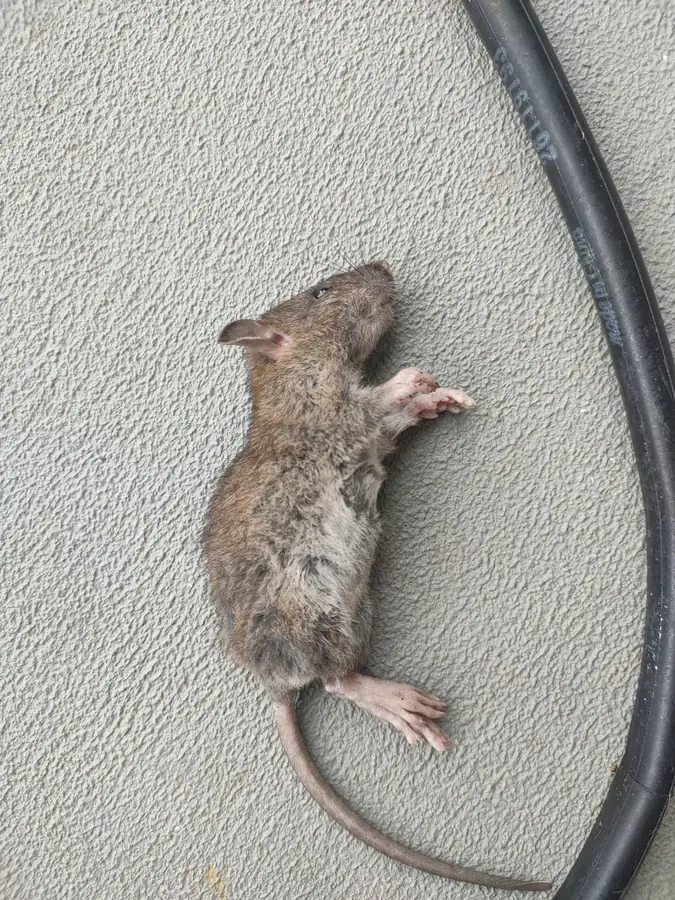
A peninsula visit starts at the boundary with the reserve or wetland if the house adjoins one. The technician looks at decks and under-house gaps for Norway rats, and at the roof space and tree contact for ship rats, since both are named in the council's park plan. Expect advice on sealing, on food and compost handling, and on whether baiting or trapping suits your section, particularly if pets or children use the garden. If the house is a 1950s or 1960s timber build and you have seen borer holes, say so, because that is a separate inspection.
Cost
A standard rat or mouse treatment is about $199 to $300, up to $1,000 or more for major infestations at large properties according to one trade source. Read on 17 November 2026; see the price guide.
Neighbours
Henderson, Massey and Royal Heights are the nearest suburbs on our map. Pest control across West Auckland has the full list.
Book
Phone 09 872 7624 and an assistant takes your details, or use the callback form. A specialist rings back.
Sources for this page
Where a source describes the place rather than pests, the pest relevance is our own reading.