Wasp nest removal
Wasp nest removal in West Auckland: what the visit covers, what the treatment involves and what to do before and after the technician arrives.
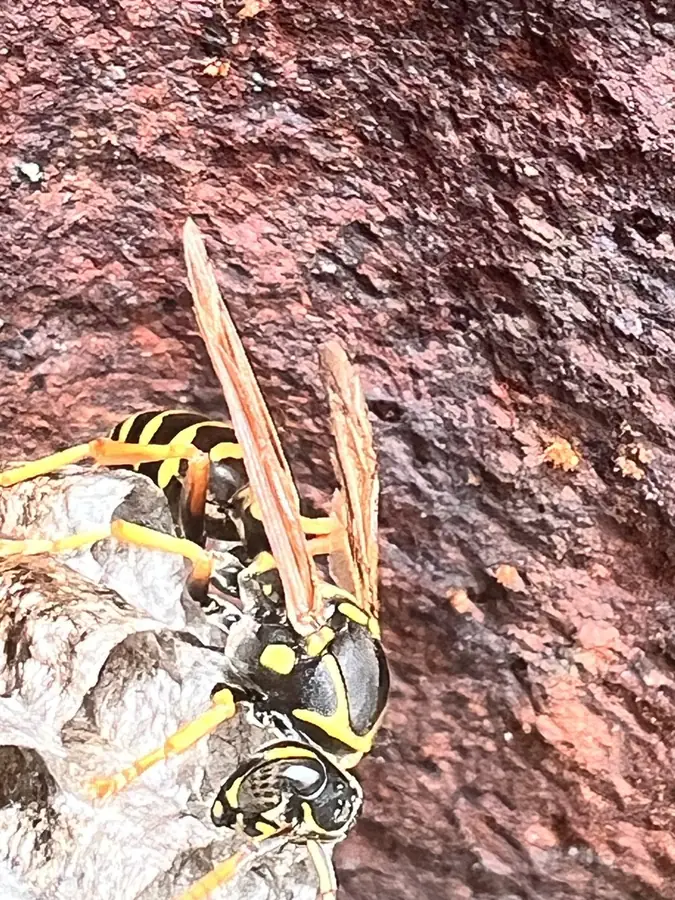
A nest in the roof void is a different job from one on a fence rail, and the quote reflects that. This page explains what happens when a technician comes to treat a nest above ground, which is the standard job behind most wasp calls in the area. Nests in the soil are covered separately under ground nests.
If you are still working out what you have, the wasps overview is the better starting point.
What counts as an above-ground nest
The term covers anything off the soil. Typical places in West Auckland houses:
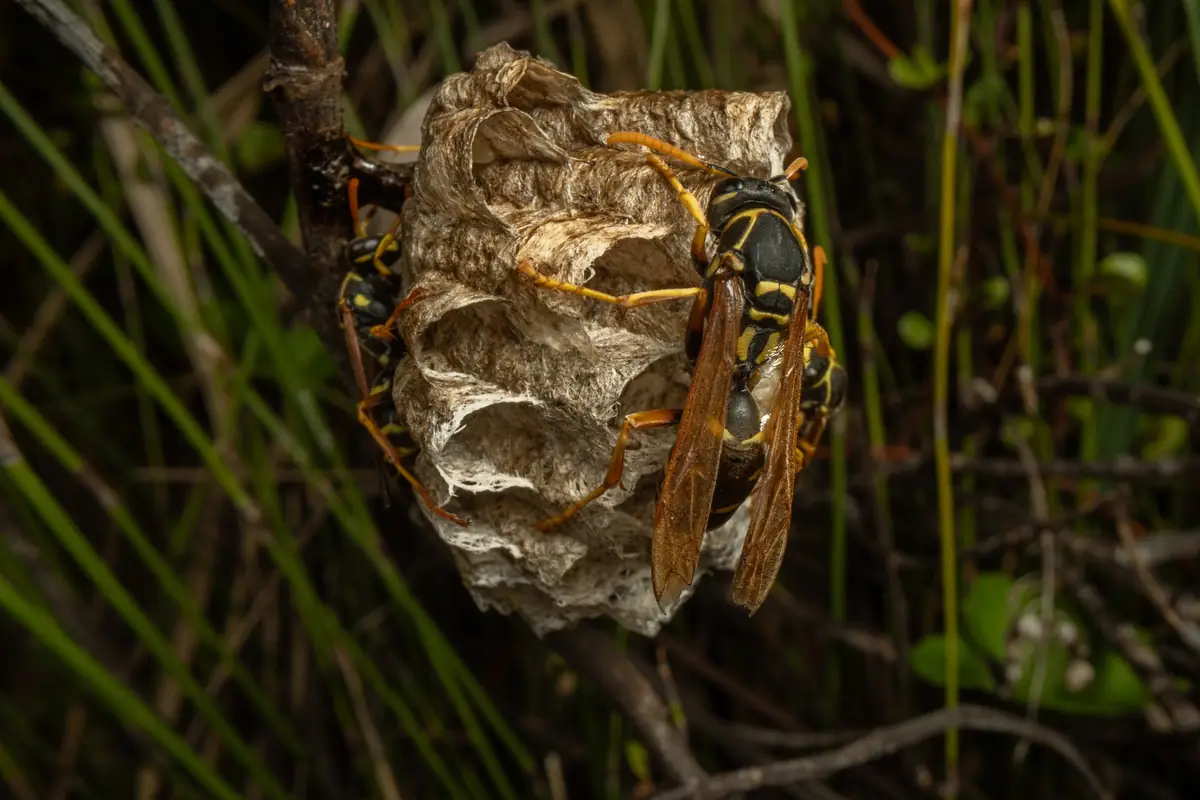
- Under eaves and soffits, where Asian paper wasps hang a flat open comb.
- In wall cavities, entered through a gap at a vent, weep hole or cladding joint.
- Roof voids and ceiling spaces, often reached along the rafters.
- Subfloors and under decks, especially on piled houses on slopes.
- Hedges, shrubs and fruit trees, where a grey ball can be hidden inside the leaves.
Northland Regional Council says the Asian paper wasp often builds nests above ground on houses and other buildings, in trees or bushes, and can reach densities of more than 200 nests per hectare.
The council reports the Asian paper wasp arrived in the late 1970s, which is why open combs are now so common on suburban eaves.
Source: Northland Regional CouncilBefore the technician arrives
Do very little. Stay clear of the entrance, keep children and pets inside and away from that side of the house, and do not block the hole. A blocked entrance sends wasps looking for another way out, and that can be through your ceiling.
Useful things to have ready when you call:
- Where the wasps are entering, as exactly as you can tell.
- How long you have seen the traffic.
- Whether anyone in the house has had a bad reaction to a sting.
- How a ladder or roof access would work for the spot.
Moving a car or a table away from the area can speed up the visit.
The treatment itself
For a wall or roof nest, the usual method is an insecticidal dust or product placed at the entrance or into the nest. Wasps carry it inside and the colony dies over hours to a couple of days. Treatment is normally done late in the day or at first light, when most wasps are in the nest and flying is slow.
An open paper wasp comb is simpler: it is sprayed directly, then taken down once the wasps are dead. Products are used under the Hazardous Substances and New Organisms Act and to label directions, which our safety and products page explains in more detail.
You may see more wasps for a day or two after treatment. Foragers returning to a dead nest circle for a while and then give up. Do not open the wall or ceiling to look; the nest can stay active in sections.
After the nest is dead
A dead nest inside a wall or roof is usually left to dry out. Old paper nests can attract other insects, and stained plasterboard may need a patch, but removing a nest from a cavity is a builder's job, not part of the wasp visit. If the nest was on show, the technician may take it away.
Close the entry gap once the activity has stopped for at least a few days. Fill the hole with sealant or a mesh patch so a queen does not nest there next spring.
Cost
Prices below are estimates from public sources, checked 17 November 2026, and not specific to West Auckland.
| Job | Estimate |
|---|---|
| Standard accessible nest | $100 to $250 |
| Hard-access nest (roof void, height) | $200 to $350 in one trade directory |
| Several nests | Additional charges may apply |
The figures come from a trade directory, a consumer guide and one operator "from" price, and they overlap rather than agree. Your written quote is what counts. The wasp price guide lists the sources and what pushes a quote up.
Where this job comes up most
Nests in walls and under eaves are common in older bush-edge houses in Titirangi and Glen Eden, and in newer cladding in the estates around Hobsonville and Whenuapai. Our reading is that any house with sheltered, warm cavities close to gardens or bush is a candidate, whatever its age.
For fruit-tree nests in vine and orchard country, read the note on wasp nests in vines and fruit trees.
How long does nest removal take?
The visit itself is usually under an hour, including locating the nest. Large roof nests or ones that need a tall ladder can take longer.
Do I need to leave the house?
Normally not. Keep windows near the nest closed and stay away from that part of the house during treatment. If someone is allergic to stings, say so when you call.
Can you take the nest away?
Where it is exposed, yes. A nest inside a wall or ceiling is left in place unless you arrange a builder to open it up.
What if the wasps are still active after three days?
Call again. A large colony sometimes needs a second application, and the technician will say if that is likely when they quote.
Arrange a visit
Call 09 872 7624 and an assistant takes your details so a specialist can call you back, or use the callback form. The steps from first call to treatment are laid out under what happens next, and the rest of the service is described on the the full service on the homepage homepage.