Orchard and vineyard country
Wasps and rats follow the fruit, in four districts.
The common thread
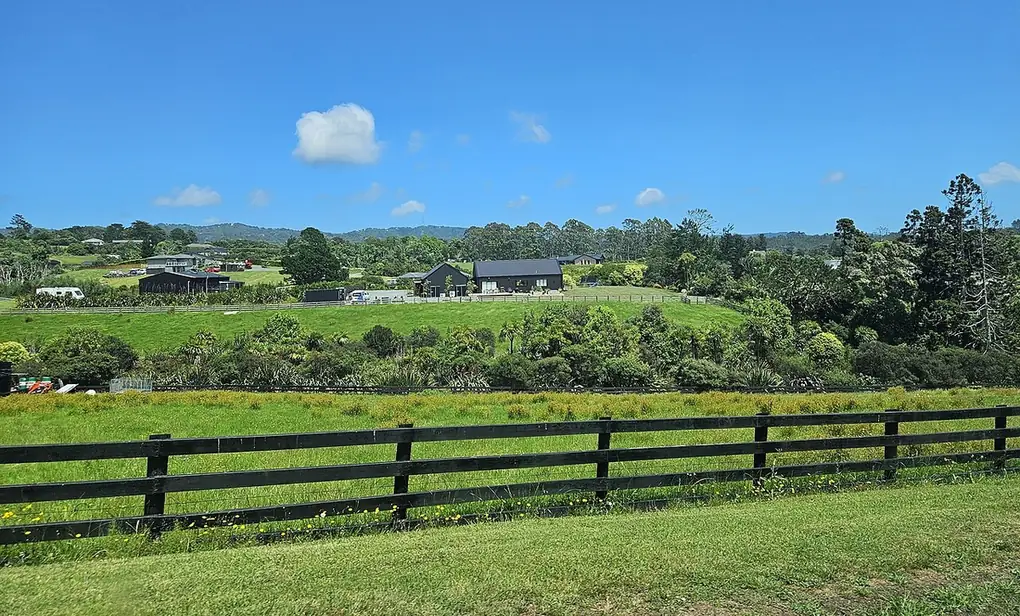
Four districts, one history: Oratia, Kumeū, Huapai and Waimauku have all been fruit and grape country. Some of the orchards have gone, but the trees and the large sections remain.
- Oratia. The Slow Food Foundation says the area has a long history of orchards and vineyards tied to Dalmatian settlers of the 1890s to 1900s, that many orchards have disappeared and that old orchards and gardens still have fruit trees, with about 50 Oratia Beauty trees in commercial production.
- Kumeū. Kumeū River Wines says the Brajkovich family bought a Kumeū property with a small vineyard by 1944.
- Huapai. Wikipedia records the first Huapai Estate sections sold in 1914 as 10-acre plots marketed as Auckland's Suburban Fruit Colony.
- Waimauku. Wikipedia describes a former farming and fruit-growing community, and DOC records the world's largest wasp nest there.
Oratia's orchards have mostly gone, but old orchards and private gardens still have fruit trees.
Source: Slow Food Foundation, Oratia Beauty appleWhy wasps follow fruit
DOC says German and common wasps are at some of the highest densities in the world in New Zealand, because they have no natural predators, winters are mild and food is plentiful. Colonies are normally about the size of a soccer ball, and DOC says they can become huge if they survive winter. Fallen fruit and ripe grapes are sugar and protein, which is our reading of why late-summer calls cluster in fruit country.
The world's largest recorded wasp nest was found at Waimauku, 3.75 m tall and 1.7 m wide.
Source: Department of Conservation, waspsThe strongest local record is community, not commercial. Pest Free Waiatarua, covering Waiatarua and Oratia, runs wasp blitz weekends. Pest Free Piha used bait stations from late February to mid-March in a pilot that cut wasps by an estimated 70%, which is outside this belt but shows when the work happens. See wasps in Oratia, the Kumeū page and wasps in Waimauku. Huapai's wasp question is folded into the Huapai page, because only its fruit-plot history supports it.
Asian paper wasps are different. The Northland Regional Council says they often build nests above ground on houses or other buildings, in trees or bushes, and can reach more than 200 nests per hectare. See the article on German and Asian paper wasps in the west and wasp nests in vines and fruit trees.
Rats and the lifestyle block
Predator Free NZ's lifestyle-block page says introduced predators including rats, mice and possums destroy fruit trees, spread diseases, damage equipment and harm native plants. It names no Auckland location. The Auckland Unitary Plan describes the Countryside Living zone as low-density rural lifestyle dwellings, farmlets and horticultural sites, and the Mixed Rural zone as often having a history of horticulture, viticulture, intensive farming and equine activities. We have not confirmed which parcels sit in which zone. The wording explains the sheds, stored feed and animals that suit rodents.
Open data from Auckland Council, taken on 17 November 2026, give Kumeū 1,237 ha of Countryside Living, Oratia 419 ha of ecological overlay and Waimauku 5,186 ha of Rural Production. See the rodent hub for treatment.
Practical checks before wasp season
- Look at bank edges, stumps and old fence posts for a hole with wasps flying in and out.
- Clear windfalls quickly.
- Check sheds and roof voids for papery nests.
- Keep children and dogs away from any nest you find.
The ground nests and nest removal pages cover the visit.
Cost
A wasp nest above ground is about $100 to $250, with hard-to-reach nests costing more, and a standard rat or mouse treatment about $199 to $300. Rural travel is extra. Read on 17 November 2026; the wasp price guide lists the sources.
Where this is common
Oratia, Kumeū, Huapai and Waimauku. The region page and the home page list the rest.
Call
Ring 09 872 7624 or use the callback form. An assistant takes your details and a specialist rings back.