Wasp nests in vines, orchards and fruit trees
Fruit country draws wasps at harvest. What turns up around vines and orchard rows, and what is safe to do yourself.
Published
In this note
You step into the apple tree with a ladder and a bucket, reach for a ripe one and find it already hollowed out, with a wasp inside. Anyone who picks fruit in West Auckland meets this sooner or later. Fruit, and especially windfalls, is food for wasps, and where the food is, the nests are not far away.
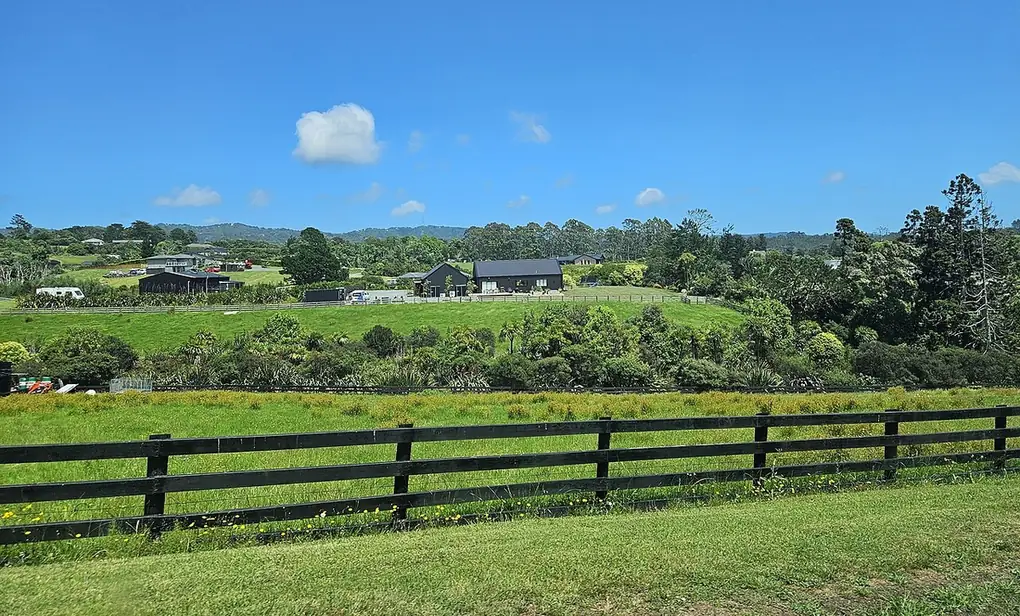
This note looks at what goes on around vines, orchards and backyard fruit trees in the western part of the region, and where the risks lie. For the general picture, start with wasps in West Auckland.
A district with a fruit history
Oratia has "a long history of orchards and vineyards", tied to Dalmatian settlers of the 1890s and 1900s, according to the Slow Food Foundation's Ark of Taste entry. It says many of the orchards have disappeared and the area is now largely residential, though old orchards and private gardens still have fruit trees, and about 50 Oratia Beauty apple trees are in commercial production.
The Ark of Taste entry for Oratia Beauty apple describes the area's orchard and vineyard history and the surviving trees.
Source: Slow Food FoundationFurther out, Kumeu River Wines says on its own history page that the Brajkovich family arrived in New Zealand in 1937, worked the gum fields, then moved to Henderson, and by 1944 had saved enough to buy a Kumeū property with a small vineyard. Wikipedia says the first Huapai Estate sections were sold in 1914 as 10-acre plots marketed as "Auckland's Suburban Fruit Colony", and that Waimauku was formerly a farming and fruit-growing community.
Auckland Council's Unitary Plan describes the Mixed Rural Zone as often having a history of horticulture and viticulture, and the Countryside Living Zone as low-density rural lifestyle dwellings, farmlets and horticultural sites.
Why fruit draws wasps
Ripe fruit is sugar, and sugar is what adult wasps want late in the year. Windfalls ferment and send a scent that wasps follow. A bin of grape marc, a bucket of apple scraps or a compost heap are as good as a feast. Our reading is that a property with trees and a compost heap offers wasps both food and nesting ground, from the banks and hedges around.
Honey bees often visit the same trees, and wasps raid hives. If you keep bees, a wasp problem may show as a stream of robbers around the hive entrance. That is a job for a beekeeper first.
Where nests turn up around fruit
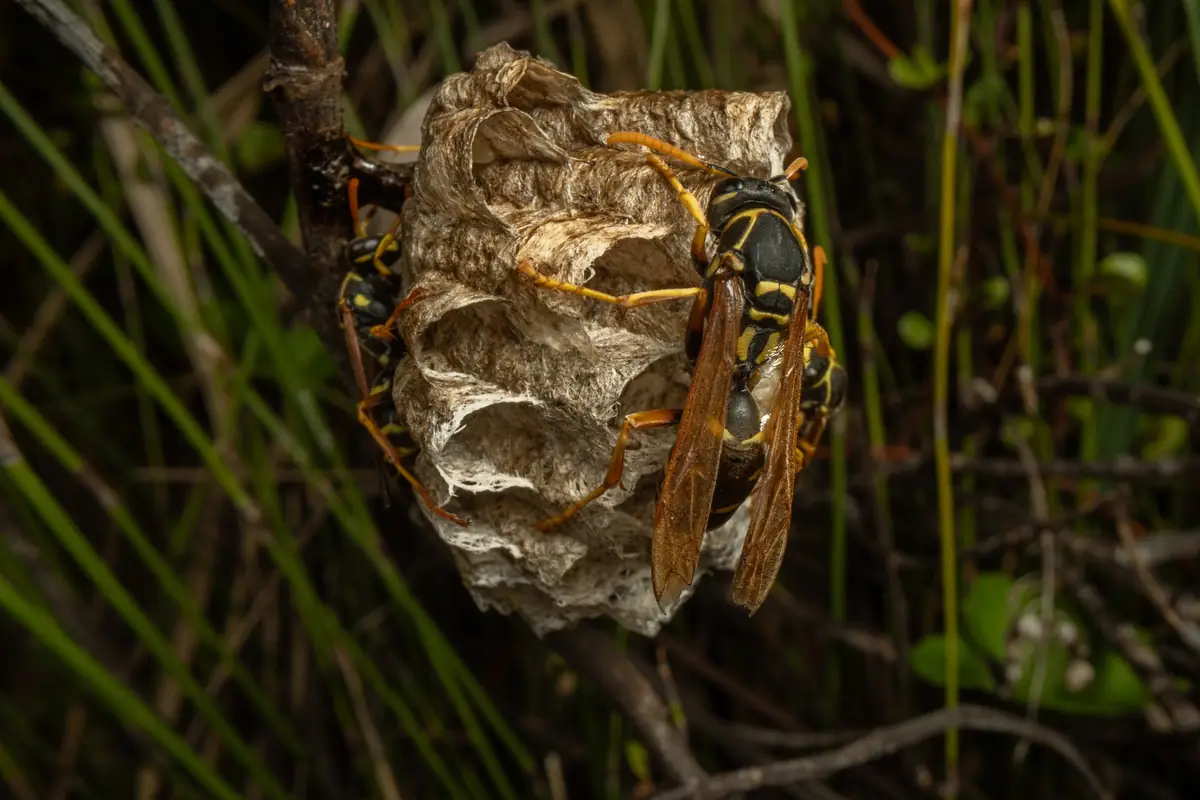
- At the base of trees, in soil banks or under roots.
- In hollow trunks and branch forks.
- In hedges and shelter belts, which are very common on lifestyle blocks.
- Sheds, packing sheds, pump houses and machinery covers.
- Under bin lids and wooden pallets stacked near the vines.
- In the walls of older houses on the block.
At the Waimauku end the connection is famous: DOC records that the world's largest known wasp nest was found at Waimauku, 3.75 metres tall and 1.7 metres wide. It was a rare event, but it makes the point that a colony left alone in a sheltered spot can reach a remarkable size.
Harvest safety
The main risk is not the nest you know about. It is the one you do not. Reaching into foliage, pulling a bin or moving a ladder can bring out guards.
- Check around a tree before you climb: watch for wasps flying in a line to or from the base.
- Wear closed shoes. Many stings are to bare feet on windfall.
- Take care with cans and cups outdoors. A wasp can crawl inside.
- Keep children away from fallen fruit.
- If you hear a low hum or see traffic to a bank, back away and ring.
If someone has swelling of the face or throat, trouble breathing, or collapses after a sting, call 111.
What is safe to do yourself
A small paper wasp comb on a low branch, in an open spot with no one around, may be dealt with using a product from the garden shop applied exactly as the label says, at dusk. For anything beyond that, ring us.
These are not jobs for householders:
- Ground nests, however small the hole.
- Nests in walls, roofs and hollow trunks.
- Any nest with a steady stream of wasps.
- Nests close to a doorway, picking area or children's space.
Never pour fuel into a hole or burn a nest. Both are dangerous.
What a visit looks like in fruit country
The technician will ask where the traffic is and when it peaks, because that guides the dusk visit. For vineyards and orchards it helps to say whether people are working that block, whether bins or bait are out and where the picking crew will be. Treatment is usually done once the light has dropped. Exact method depends on the nest type, as set out on the wasp nest removal and ground nests pages.
Rural properties may take longer to reach and may have more than one nest. See the wasp price guide for the estimates we use, checked 17 November 2026 and not specific to West Auckland. Multiple nests may attract additional charges.
Suburb notes
The orchard and vineyard country page links the rural suburbs together. For individual places see Oratia, Kumeū, Huapai and Waimauku. Pest Free Waiatarua, which covers Waiatarua and Oratia, runs wasp blitz weekends, according to the Pest Free Waitākere Ranges Alliance directory.
Cutting the attraction
Wasps are less likely to settle where food is not available all the time.
- Pick fruit promptly and remove windfalls daily in season.
- Seal compost or bury fresh scraps under dry material.
- Close bin lids on the sweet waste and rinse bottles and cans.
- Deal with pets' outdoor food bowls.
- Keep an eye on spring queens searching holes in banks and sheds, and fill gaps after a nest is treated.
Will treating a nest harm the fruit?
Products are used to label. The technician places them at the nest entrance rather than over fruit, and will tell you about any waiting periods if the nest is near produce.
I run a small vineyard. Should I be worried about wasps in the grapes?
Wasps often damage ripe grapes by feeding on split berries. A nest on the block is worth treating before harvest, not during it.
Can a nest in a fruit tree survive winter?
Most colonies die at the end of the season. Some survive in mild spots. Do not assume a nest is gone in winter if there is still traffic.
Ring about a nest
Call 09 872 7624 and an assistant takes your details so a specialist can call back, or use the callback page. The everything we arrange in the west homepage lists everything else.
Call 09 872 7624, or book a callback and a specialist will ring you.
Call now Book a callback