Wasps in Waimauku
The world's largest recorded wasp nest was found at Waimauku. Nobody expects yours to be that size, but the reason it grew is worth knowing.
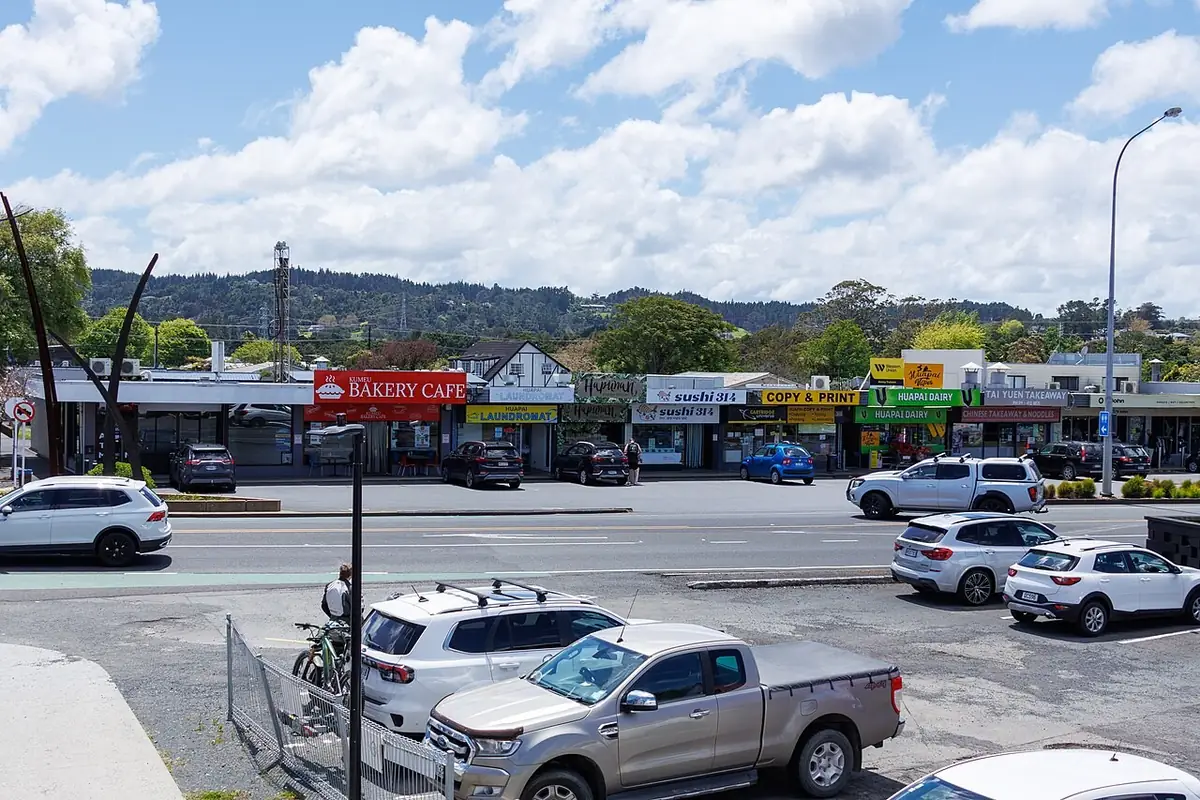
The Department of Conservation uses Waimauku as its example of what happens when wasps are left alone.
DOC says the largest recorded wasp nest was found at Waimauku, near Auckland, 3.75 metres tall and 1.7 metres wide. German and common wasp colonies are usually about the size of a soccer ball, but can become huge if they manage to survive over winter.
Source: Department of ConservationThat is the useful part. A colony is normally small and short-lived. It becomes a problem of a different order when it gets through winter. Rural properties with sheds, trees, old fence lines and areas nobody visits are where that is most likely to happen, because nobody sees the nest.
Why a nest like that is possible here
Waimauku is a large, mostly rural district. Council open data puts it at 5,908 ha, of which 5,186 ha is Rural Production zone, with 864 ha of flood plain, 575 ha of Significant Ecological Area and 207.5 km of permanent stream (measured 17 November 2026, boundaries generalised, from council layers). Wikipedia describes a settlement that was formerly a farming and fruit-growing community, with a dairy factory established in 1909.
Our reading is that land like this has the things a wasp colony wants: undisturbed cavities in banks and under old buildings, plenty of fruit and flowers, and many hectares that nobody inspects regularly. We cannot say why the record nest was in Waimauku in particular, and DOC does not say either.
What to look for
- Wasps flying in a steady line to and from one spot. The nest entrance is where that line ends. DOC suggests searching on sunny days near dawn or dusk, when low light shows the flight path.
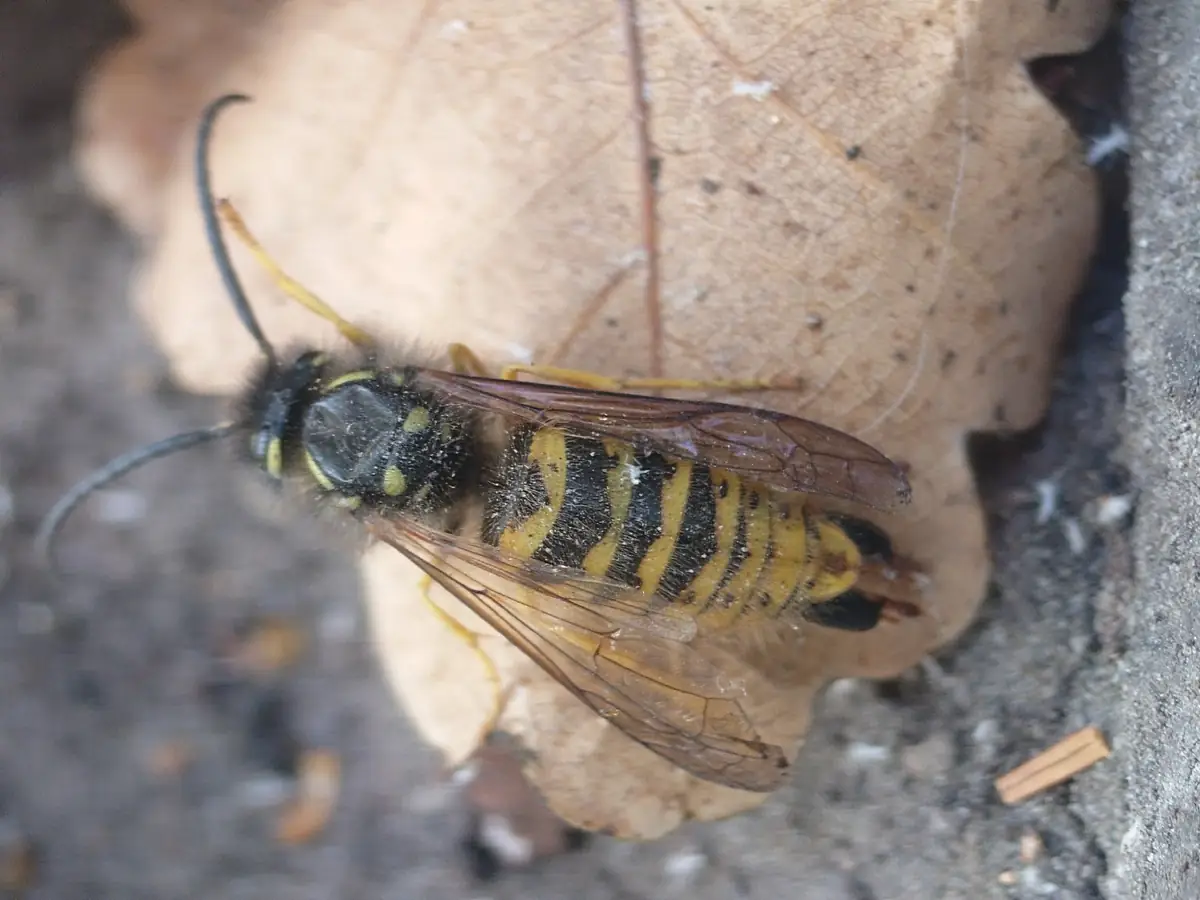
- Nest colour and size. DOC says German wasp nests are grey and common wasp nests brown. A soccer ball is normal in summer. Larger means the colony is established.
- Paper wasps are different. DOC says Asian and Australian paper wasps build small nests about the size of a pear, which is a separate job from a German wasp colony. Our field note on German and Asian paper wasps in the west compares them.
- Nests in odd places. Check old sheds, the underside of decks, bank cuts beside driveways, hollow logs and wall voids.
DOC's own advice for removing a single nest is to treat it after dark when wasps have stopped flying, using insecticide at the entrance, and to follow the safety instructions on the product. We recommend not doing this alone with a nest in a wall, roof or bank, and never using a torch beam on a nest, because wasps fly up the beam.
What a visit involves
Locate.
The technician finds the nest, which may mean tracing flight lines at the edges of the day.
Assess.
Nest type, size and location decide the method: an exposed nest, a bank, or one inside a structure.
Treat.
Products go on after dark to label directions, and the Hazardous Substances and New Organisms Act applies to what is used.
Check.
If wasps are still flying, the treatment is repeated.
For nests set in the ground, see our page on ground nests, and for the general sequence wasp nest removal.
Cost
Published Auckland sources put a standard accessible nest at about $100 to $250, and hard-access nests, such as roof voids or heights, at $200 to $350 (checked 17 November 2026). A big nest, or several on a large rural property, is quoted after inspection. See the wasp price page.
Is a nest the size of a football dangerous?
It is a reason to be careful. A larger colony has more wasps defending it, so stay clear and do not disturb it.
Does the record nest mean Waimauku is worse than elsewhere?
DOC mentions it as a record, not as a measure of how many nests the area has.
Next step
The Waimauku suburb page covers the district, and the wasps hub explains why numbers peak in late summer and autumn. Call 09 872 7624. An assistant takes your details for a specialist callback, or use the callback form.
Sources for this page
Where a source describes the place rather than pests, the pest relevance is our own reading.