Ship rats, Norway rats and mice in West Auckland homes
Which rodent is in the house changes where it nests, what it eats and how it is dealt with. A local guide to telling the three apart.
Published
In this note
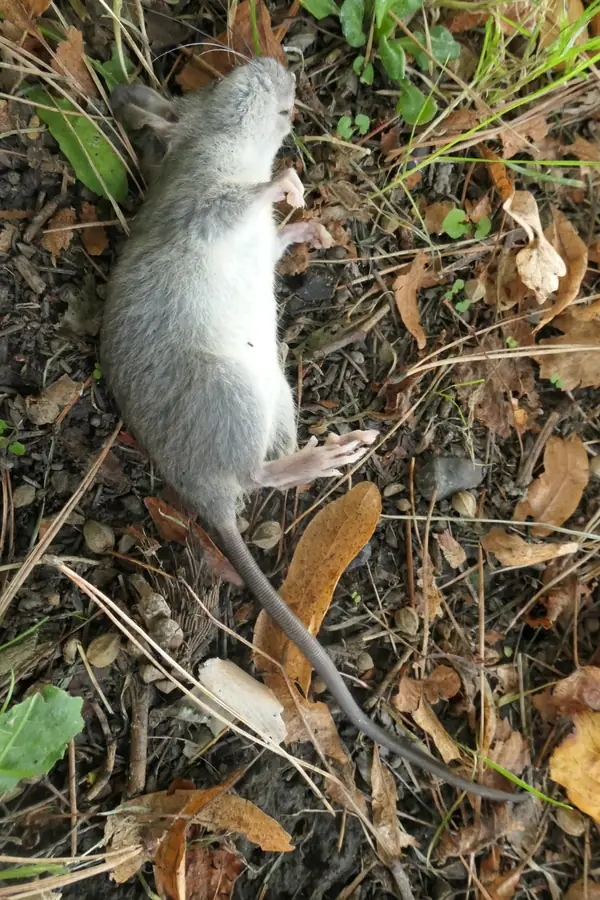
Ask a Titirangi homeowner and a Henderson flat tenant what is in their ceiling and both will say "rats". They may both be right, and they may be dealing with entirely different animals. Three rodents matter in West Auckland houses: the ship rat, the Norway rat and the house mouse.
The distinction decides where we look, what we use and how many visits it takes. This note covers how to tell them apart, which one suits which kind of house, and why it is worth knowing before you ring.
The ship rat: the climber
DOC describes the ship rat as the smaller of the two European rat species, with a tail longer than its body and ears that cover the eyes when pressed forward. It is a good climber, found across lowland forest, and it can reach bird nests high in trees.
The ship rat is the most commonly found rat in New Zealand, a good climber and widespread in lowland forest. The Norway rat is more typically associated with human activity and found in urban areas.
Source: Department of ConservationFor a house, the climbing matters most. A ship rat reaches the roof space along a tree branch, a power line, a fence top or a climbing plant against the wall. Once in, it nests high: in insulation, behind a header tank, along the top plate. The noise is up above you, usually at night. That pattern fits the signs of rats in the roof described elsewhere in our notes.
The Norway rat: the ground-level one
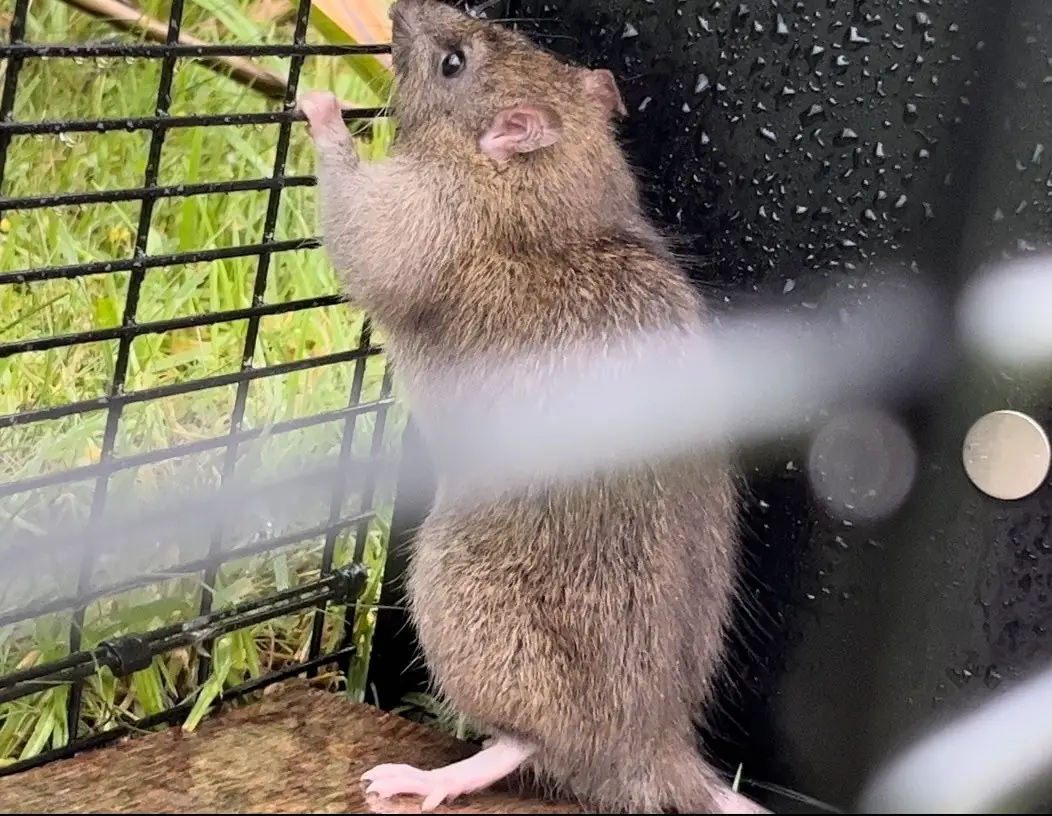
DOC puts the Norway rat at about 20 cm body length, with a thick tail around 18 cm that is shorter than the body, and ears that don't reach the eyes when pressed forward. It is mainly associated with people and urban areas.
In practice, this is the rat that lives low: under a deck, in a drain, along a compost heap, beside a fence line, in a burrow in a bank. It chews through to subfloors and kitchens from outside. Gaps around pipes at ground level matter. Where there are chickens, bins with loose lids or stream banks, it does well.
Which likely means a flat Westgate section with a garden bin and a stream behind it is more of a Norway-rat concern than a roof-space one, though we say this as our reading of the habits, not something we have counted in the area.
The house mouse: small, local and persistent
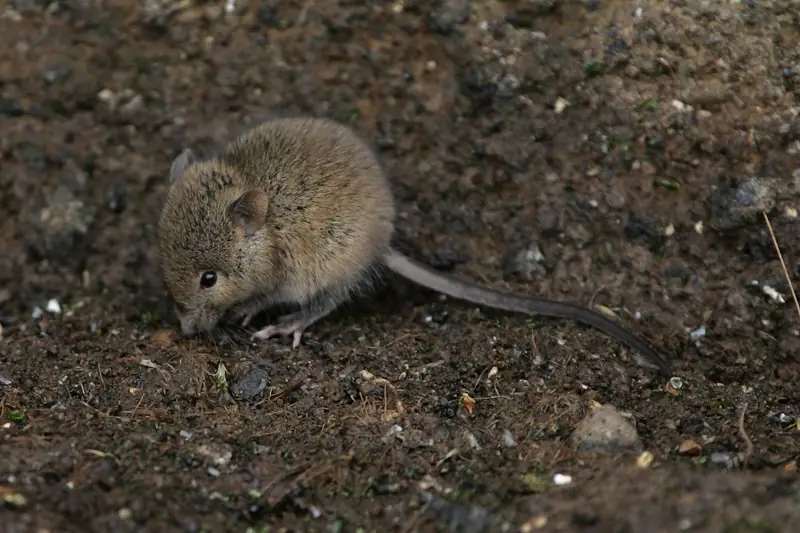
Mice are far smaller. They need only a small gap to enter, they range over a much smaller area than rats, and a family can live behind a single kitchen cupboard or in a wall void. A mouse leaves little droppings, often found in drawers, pantry shelves and along skirting.
The mouse problem tends to be inside the house from the start, which is why the mouse control page is separate from the rat work. The treatment differs: mice are less cautious about new objects than rats, which affects trap and bait choices, but a technician decides that on site. Mice also behave differently around traps and bait, which is another reason the species matters.
How West Auckland's setting shapes the mix
Most of the Ranges edge is forest. Auckland Council's monitoring report says ship rats and other mammalian predators are still present in the Waitākere Ranges, and the NZ Herald reported that in winter 2019 rat footprints appeared in 32% of Ark in the Park monitoring tunnels, the highest since the project began in 2002.
For houses at the bush edge, such as those in Titirangi and Oratia, our reading is that ship rats arrive from the trees. Around the village in Titirangi, locals reported rats "the size of cats" among free-roaming chickens in 2019, and Auckland Council asked people not to feed chickens where scattered food attracts rats (RNZ, 23 June 2019). That sounds more like a Norway rat story, at ground level and tied to food.
Down by the water the story changes again. At Te Atatū, Harbourview-Orangihina Park's volunteer pest programme targets ship and Norway rats, possums and hedgehogs, and as at October 2021 had caught 322 rats and 262 mice on 66 traps. Both rats and a lot of mice, in one 85 ha reserve beside housing.
The park's volunteer pest programme targets ship and Norway rats, possums and hedgehogs, with a significant number of mice also caught. It runs 66 traps, and as at October 2021, 322 rats, 262 mice, four hedgehogs and six possums had been caught.
Source: Auckland Council, Harbourview-Orangihina Park community restoration planQuick comparison
| Ship rat | Norway rat | House mouse | |
|---|---|---|---|
| Where it lives in a house | Roof space, upper walls | Subfloor, ground level, outside burrows | Walls, cupboards, kitchens |
| Climbs well | Yes | Less so | Yes, small gaps |
| Tail | Longer than body | Shorter than body | Long, thin |
| Typical clue | Night noise above | Burrows, gnawing at the base of walls | Small droppings in drawers |
Why the species changes the plan
Entry points. A ship rat enters high, so the technician looks at the roofline, eaves and wires. A Norway rat comes in low, so the subfloor and pipe gaps matter. See rat proofing for pole houses and subfloors for the ground side.
Baiting or trapping. Placement follows habits. A device in the roof works for a ship rat. A bait station at ground level, away from pets and children, suits a Norway rat. The choice stays with the technician.
Follow-up. Mice and rats don't always read the same way after a first visit, and the five day mouse rule is one folk guide people use to judge whether the activity has stopped.
What to note before you call
- Where you hear or see the activity, and what time of night.
- Droppings: where and how big. See our note on rat or mouse droppings.
- Any trees touching the roof, compost, chickens or pet food outside.
- Any pets or young children in the house.
None of this needs to be exact. A specialist rings you back, asks the questions and books a visit. The technician identifies the animal and quotes in writing, and our price guide for rats and mice shows what the guides estimate.
Which rat is in my roof?
Most likely a ship rat, because it climbs. A technician confirms from droppings, runs and entry points.
Can mice and rats be in the house at once?
Yes. It is common to find both, which is why one trap type rarely covers everything.
Does it matter that I'm near the bush?
Our reading is yes: bush-edge houses are exposed to a steady supply of ship rats. See our page on bush-edge homes.
Call about rodents
For the full service, see the rats and mice page, or return to the overview of pest control across West Auckland. To arrange a visit, book a callback or phone 09 872 7624. An assistant takes your details and a specialist rings you back.
Call 09 872 7624, or book a callback and a specialist will ring you.
Call now Book a callback