Rats and mice in Whenuapai
Whenuapai grew by 70 percent in five years, on land that was paddocks, a tobacco district and an air force base. No one has counted its rats, but the setting gives a fair guide.
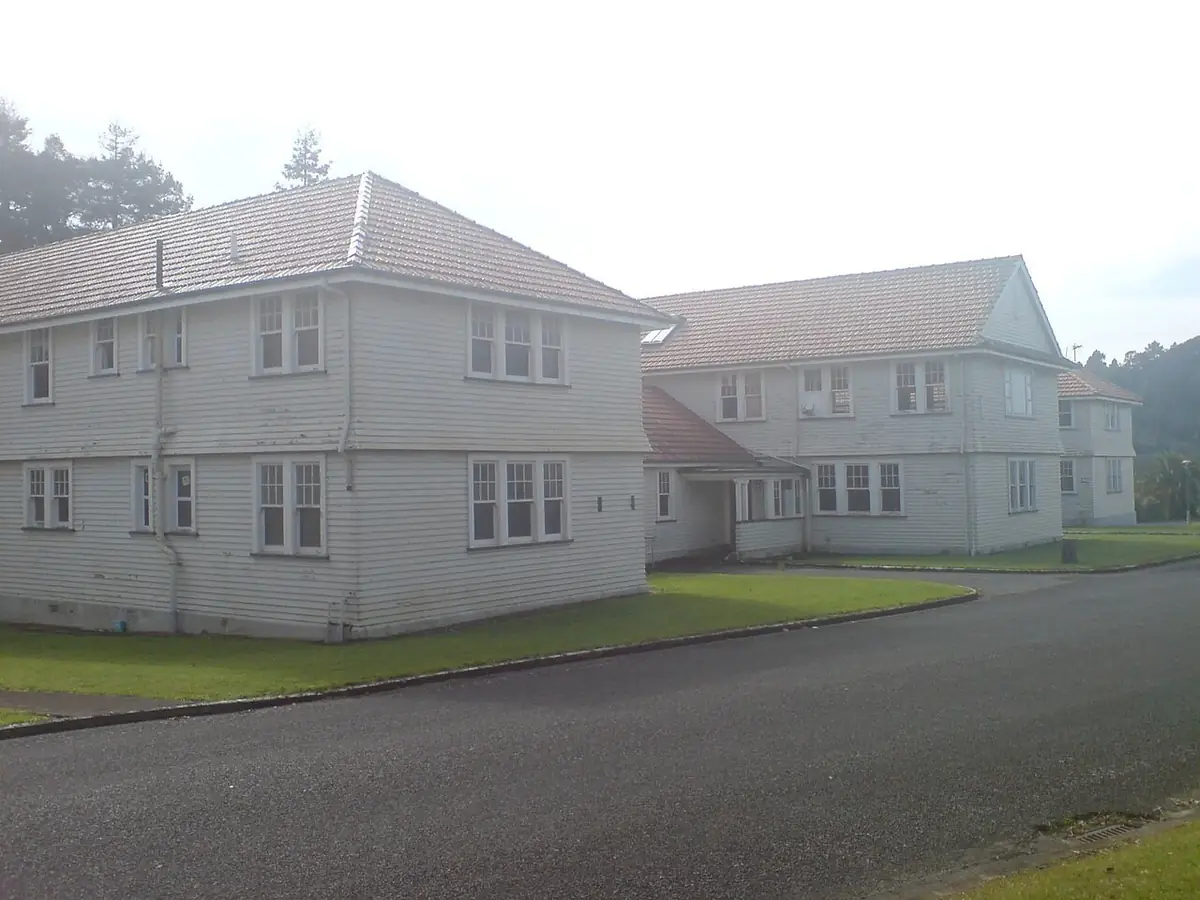
This is one of the cases where we say plainly what we do not have. There is no trapping group or survey that names rats in Whenuapai. What we do have is a description of the land, and rodents tend to behave predictably when land like this is built on.
The land
Of Whenuapai's 1,542 ha, 136 ha is mapped as flood plain, 6 ha is in a Significant Ecological Area overlay and 32.1 km of permanent stream runs through it. The same data zones 953 ha as Future Urban, which is rural land awaiting urban rezoning, and 224 ha as airfield (measured 17 November 2026, boundaries generalised).
Source: Auckland Council open dataThat is a mostly open, low-lying and stream-crossed landscape, with relatively little formal bush. Nearly two thirds of it is land that has yet to be built on.
The history
According to Wikipedia, after kauri logging and gum digging many landowners turned to pasture or crops, tobacco was grown (over 120,000 pounds by 1929, ending by 1940), and RNZAF Base Auckland now occupies a large site. The same article records 6,300 people in 2,091 dwellings in 2023, an increase of 2,604 people or 70.5% since 2018.
Two things are worth taking from that, with a hedge: Wikipedia is the only source we have for Whenuapai's history, and the numbers are the census figures it cites.
Our reading
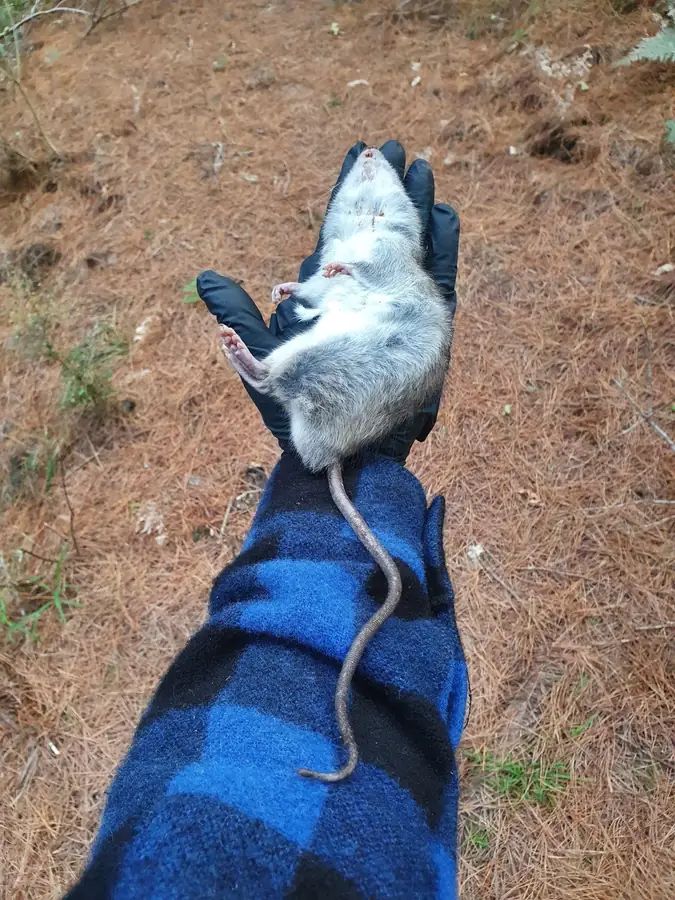
Rodents live in paddocks, hedgerows, drain banks and the stored materials around farm sites. When those paddocks become building sites, the animals do not vanish. Earthworks and fencing push them along drains and stream edges, and new streets offer shelter in material stacks, rubble, and bare cavities under decks. The first completed houses are often the best shelter nearby. We describe this as an inference. Nothing published tests it for Whenuapai.
The practical consequences, for a house here:
- New homes, open edges. A section backing onto paddock or the airfield boundary has the supply next door.
- Building materials left in the open. Off-cuts, pallets, pipe stacks and tarps are shelter. Clear them from beside the house.
- Drain and stream edges. With 32 km of permanent stream in the boundary, many sections are close to one.
- Older farmhouses and outbuildings. Sheds and barns on remaining rural land hold the long-established colonies.
The Department of Conservation says the Norway rat is mostly found in urban areas and linked to human activity, and describes the ship rat as a good climber found widely. Both are plausible, and which you have depends on how the house sits.
What a visit covers
A technician checks the outside edges and drains, the garage and subfloor, and the roof space, and gives you a written quote. Tamper-resistant stations or traps go where activity is. The standard house range is about $199 to $300 in published Auckland sources, and heavy or large jobs can reach $1,000 or more (checked 17 November 2026); see the rats and mice price page. For a new house, rodent proofing tends to matter most.
While the street is still being built
If building work is going on beside you, expect more movement of rodents for as long as the ground is being disturbed. Keep bins closed, do not leave pet food outside, and keep stacked materials off the ground and away from the house wall. If you are the builder or owner, remove food scraps from the site daily. These steps do not remove an established colony, but they stop the site from feeding one.
I have only just moved in. Is it normal to hear rats already?
It is common in newly built areas, partly because the surrounding land is still being disturbed.
Is the airfield a source?
We cannot say. Large open sites can hold rodents, but there is no source for this one.
Next step
The Whenuapai suburb page and the page on new-build estates cover similar ground. The overview of rats and mice shows how jobs run. Ring 09 872 7624, where an assistant takes your details for a specialist callback, or use the callback form.
Sources for this page
Where a source describes the place rather than pests, the pest relevance is our own reading.