Rat or mouse droppings: how to tell the difference
Size, shape and where they turn up separate a rat problem from a mouse one, and that decides the whole treatment plan.
Published
In this note
You find a scatter of dark pellets in a drawer, or a heap along the roof timbers, and the first question is what left them. The answer shapes everything that follows, because rat work and mouse work are not the same job.
Droppings are a useful clue, not a verdict. This note explains what to look at, what the limits are and when to stop guessing.
Size is the first clue
Mouse droppings are small, roughly the size of a grain of rice or a little smaller, and pointed at the ends. Rat droppings are noticeably bigger and thicker. If you can compare the pellet against a grain of rice, a mouse one is similar and a rat one is clearly larger, and chunkier.
We have not got a New Zealand source that gives measurements in millimetres for local species, so we describe the difference qualitatively. A technician looks at the droppings on site and confirms. Please don't treat our description as a diagnosis.
Shape and what it hints at
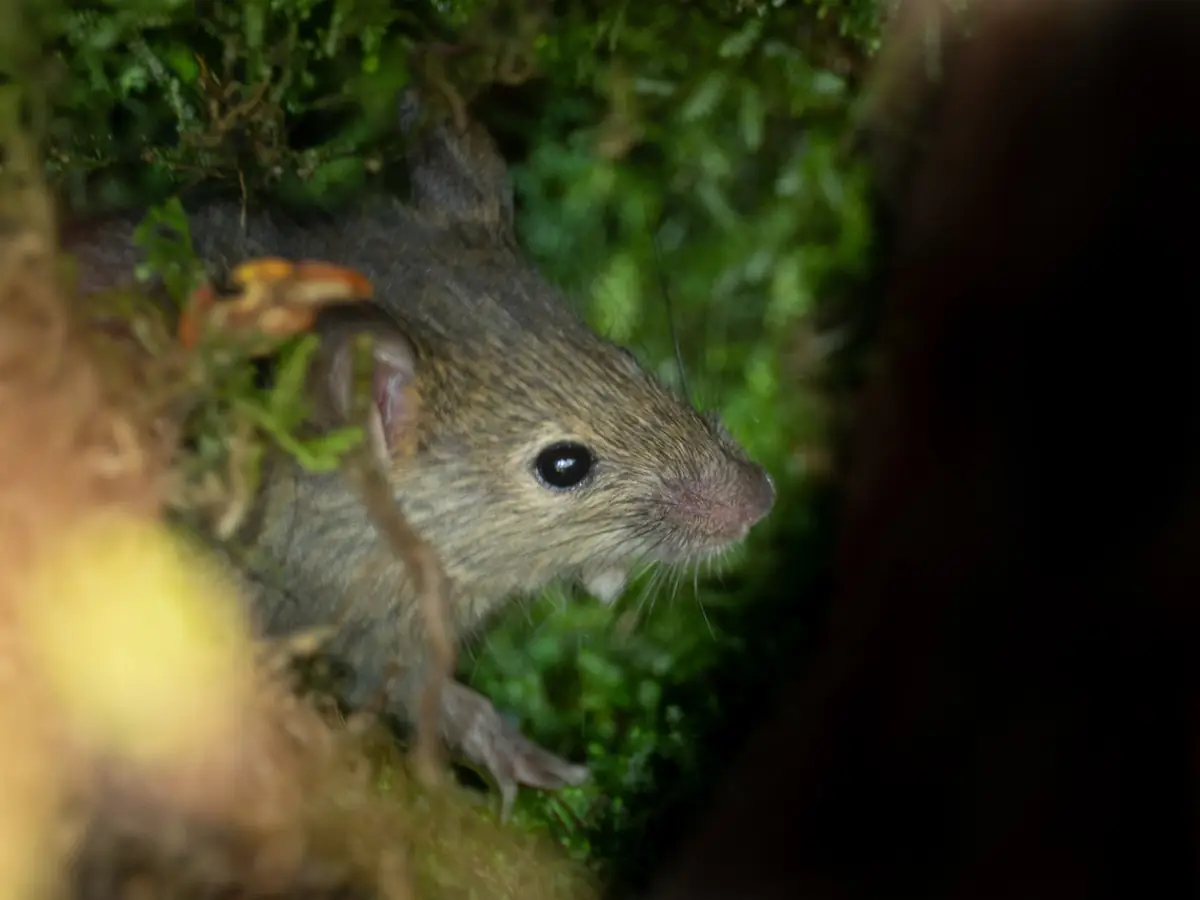
Ship rat droppings tend to be spindle shaped, with pointed ends, while Norway rat droppings are bulkier with blunter ends. The difference is easiest to see when you have both beside each other, which you won't. We mention it because it matches the habits DOC describes: the ship rat is the smaller of the two, a good climber, and the Norway rat is bigger and tied to human places.
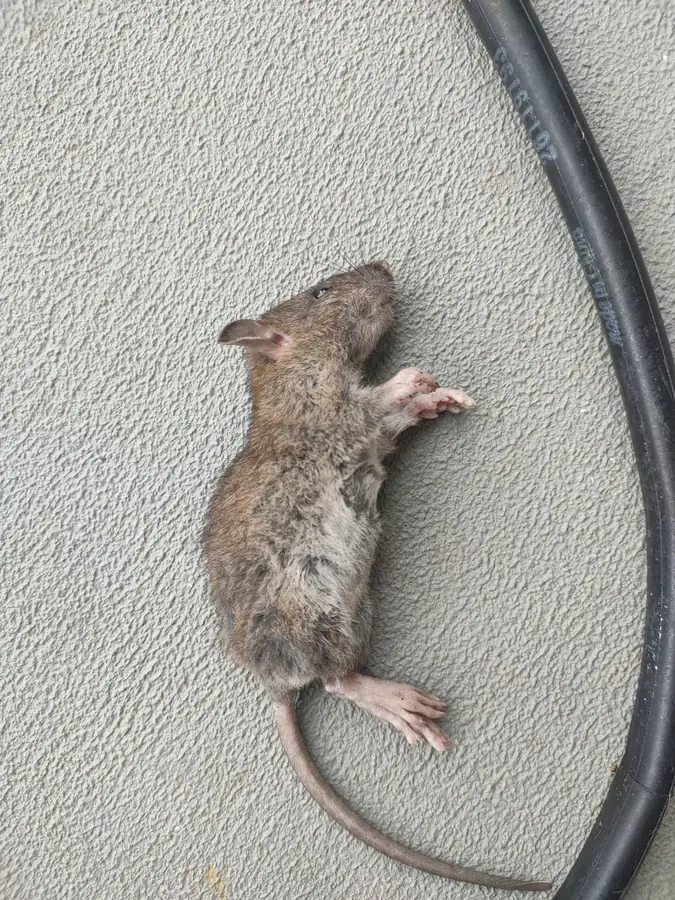
The ship rat is the smaller of the two European rat species, with a tail longer than its body. The Norway rat has a body about 20 cm long and a thick tail about 18 cm.
Source: Department of ConservationWhere they turn up
Place gives as much information as shape.
In the kitchen and pantry, small droppings in drawers, behind the toaster, along skirting boards or inside the cupboard under the sink usually point to mice.
In the roof space, clusters along the top plate or beside pipework often indicate ship rats, since they climb and nest high. Our note on signs of rats in the roof covers the other clues up there.
Under the house or in the garden shed, low-level droppings, especially with a burrow or gnawed material nearby, can mean a Norway rat.
On a bench or in a bag of pet food, almost anything can leave a mark, so look at the wider pattern.
Fresh or old
Fresh droppings are dark, moist and shiny, and they soften when pressed. Old ones are grey, dry and crumbly. A dry, dusty scatter might be months old, and may tell you there used to be a problem and not that there is one now.
That is where the folk rule people call the 5 day mouse rule comes in. Sweep up the droppings, check daily, and note whether any new ones appear. It is a rough gauge, not an official test.
Other droppings that get mistaken
Not everything small and dark is from a rodent. Cockroach droppings are tiny specks, like ground pepper, or small cylinders. Possums leave much larger droppings. Lizards leave a small dropping with a white tip. A technician can tell them apart quickly, and sometimes that settles the question straight away. Our page on German cockroach treatment helps with the pepper-speck kind.
A photo helps the callback
When you ring, a clear photo makes the conversation faster. Put a coin or a grain of rice beside the droppings for scale, take one shot of the spot and one wider shot showing where it is. Note whether you have found them once or in several places, and whether they are in the same spot a day later. The specialist can then book a visit that suits what you describe.
Handling droppings safely
Don't sweep dry droppings with a broom or a vacuum, as that puts dust in the air. Wear gloves, dampen the area first, wipe up with paper towel and bin it in a sealed bag, then wash your hands. Droppings can carry bacteria, and rodent-borne illness is a general concern. If someone in the house is unwell and you suspect rodent contamination, ask your doctor, since we can't give medical advice.
Keep food covered and put pet food away while the problem is being dealt with.
Why the answer matters for treatment
If the pellets are mouse-sized, the work is indoors and low, with small gaps to find. See the mouse control page for how that goes. If they are larger and in the roof, it is a rat job, and the rats and mice overview explains the process.
Species also affects what is placed where. A technician considers pets, children and wildlife. DOC research on anticoagulant residues in rats documents secondary risk to non-target animals, so bait is placed in locked stations, not scattered. See our safety and products page for how we approach it.
Local note: why West Auckland sees both
Both animals are well suited here. Harbourview-Orangihina Park at Te Atatū has caught 322 rats and 262 mice on 66 traps (to October 2021, per Auckland Council's restoration plan), which means a reserve beside houses can hold plenty of both. See the Te Atatū rat page. At the Ranges edge, ship rats are more likely, which our reading ties to the bush. Read about Titirangi for that setting.
As at October 2021, 322 rats, 262 mice, four hedgehogs and six possums had been caught on 66 traps, with a significant number of mice among the catch.
Source: Auckland Council, Harbourview-Orangihina Park restoration planCan I tell the species from one dropping?
Not reliably. Look at size, shape, freshness and where they are, and let a technician confirm.
I only found a few. Is that serious?
A few can mean one wandering animal or a larger group. Fresh droppings that keep returning point to an active problem.
Should I clean them up first?
Photograph them first, then clean safely. A fresh clean-up also lets you see whether new droppings appear.
Booking a visit
If you've found droppings, book a callback or phone 09 872 7624. An assistant takes your details, and a specialist rings you back. Our main page on pest control in West Auckland lists the other services, and the price guide shows estimates.
Call 09 872 7624, or book a callback and a specialist will ring you.
Call now Book a callback