White-tails, huntsmen and the Avondale spider
The spiders people actually find in West Auckland homes, which ones matter and which are just large.
Published
In this note
Most calls about spiders are about three types: a grey, slim spider on the wall at night, a flat hairy one the size of a hand behind the curtain, and a web that keeps coming back on the porch. Each has a different answer, and only one of them is likely to need a technician.
This note sorts them out with the help of Te Papa's account of a spider that carries the name of a West Auckland suburb. Our spider service page covers the treatment side.
The Avondale spider
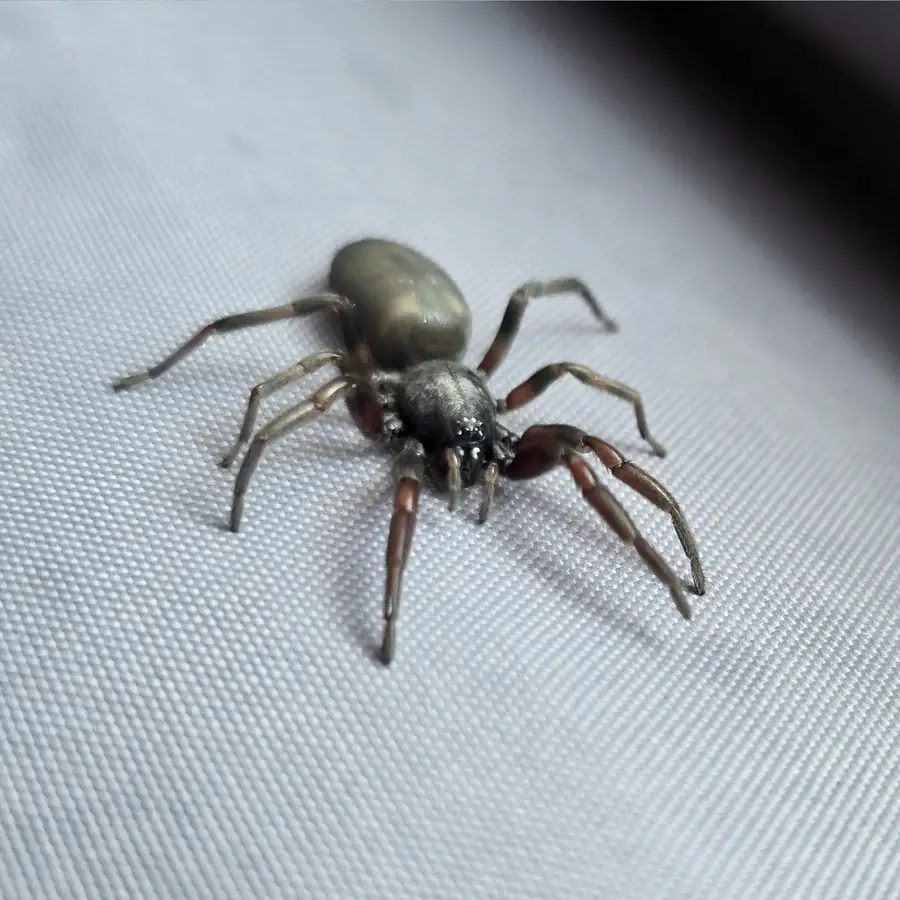
Te Papa's collections page says the Avondale spider is an Australian immigrant, and that it gets its name from the Auckland suburb where it first became established. It is a huntsman. It is pale fawn or grey, nocturnal, and by day hides under loose bark, with wattle trees named as one site. It does not use a web to catch prey, and Te Papa calls it rather docile, with little inclination to bite anything other than suitably sized prey.
The Avondale spider is an Australian immigrant named for the Auckland suburb where it first became established. It is a huntsman, pale fawn or grey, nocturnal, hides under loose bark by day, does not use a web to catch prey and is rather docile.
Source: Te PapaNotice what that means in practice. The spider you find in a bedroom is a hunter that has wandered inside, not a web-builder that has set up home. It will move on if you give it a chance. We have not confirmed the date it arrived, and so we do not state one. The suburb page at Avondale covers the local angle.
Huntsmen in general
Huntsman spiders are flat, long-legged and fast, and they can span a hand. They flatten themselves into gaps behind picture frames and curtains, and they scuttle sideways. They are startling, but they are hunters of insects, and a huntsman in the house is helping reduce flies and moths. People tend to find them in summer, when they roam more.
To remove one, place a clear container over it, slide a stiff card beneath and carry it outside. Most do not bite. If you are not comfortable with that, a broom outside the door works. Spraying a huntsman does not stop the next one: it is likely to come from the garden or the roof space.

White-tail spiders
The white-tail is slimmer, with a grey-brown body, a pale tip at the end of the abdomen, and no web for catching prey. It is a ground and wall hunter and is common in Auckland. It has a long reputation for causing skin ulcers, but the available medical evidence does not support that, and most bites are minor. A bite that gets worse, or leaves you unwell, is a reason to see a doctor or call Healthline. This note is general information, not medical advice.
White-tails hunt other spiders and insects, and they enter houses through gaps around windows and doors in autumn. Sealing the gaps, brushing down eaves and reducing clutter at floor level lowers the numbers.
Web builders: the problem on your porch
The spiders that actually make the mess are web builders. Orb weavers spin large wheels across paths and between the house and the fence, and small cobweb spiders fill corners of eaves and windows. They are harmless to people. They are also the ones a technician is called for, because the webs return fast. The note on webs, eaves and outdoor lights explains why.
A quick guide
| Seen | Probably | Do |
|---|---|---|
| Hand-sized, flat, hairy, on a wall at night | Huntsman | Carry outside |
| Slim, grey-brown, pale tip, on the floor or wall | White-tail | Seal gaps, tidy floor clutter |
| Large wheel web on a path | Orb weaver | Brush down, reduce lights |
| Fine messy web in eaves | Cobweb spider | Brush down, consider exterior treatment |
| Shiny black spider with a red mark, in a dry sheltered spot | Possible redback | Photograph from a distance and call us |
The redback is an introduced spider that can give a painful bite, so treat a suspected one with care and do not handle it. Katipo, the native relative, lives in coastal dunes rather than gardens.
Why West Auckland has a lot of them
Bush and creek corridors run into the suburbs, and the spiders follow the insects. We don't have local counts, so this is our reading, and bush-edge homes are the most likely to see them. Older houses with loose cladding, timber subfloors and cluttered sheds provide the sheltered gaps spiders want. In a newer house the gaps are around joinery and meter boxes.

When a technician helps
Book a visit when:
- webs return within days on exterior walls and soffits;
- you have identified a redback, or one is suspected near a play area;
- you are preparing a house for sale, rent or a party;
- someone in the house is very anxious about spiders, and cutting numbers would help.
A technician sprays the exterior eaves, window frames and decks, and removes webs. The effect lasts for some weeks, not months, and the visit does not stop new spiders walking in.
What it costs
Indicative figures, checked on 17 November 2026 and not specific to West Auckland: Professional Pest Manager gives $150 to $300 for a standard exterior spider treatment and $200 to $400 for interior plus exterior. One Auckland operator lists from $220. We have no verified price for web removal alone or spider-proofing, and the specialist quotes those after a look. See the roaches, ants and spiders price guide.
Call us
If you are not sure what you have, send a photo. Call 09 872 7624 and an assistant will take your details for a specialist callback, or book a callback. The rest of our services are listed under pest control across West Auckland.
Call 09 872 7624, or book a callback and a specialist will ring you.
Call now Book a callback