Spider webs, eaves and outdoor lights
Why webs build up under eaves and around lights, and what reduces them without treating every surface.
Published

In this note
Brush the porch light clean on Sunday and by Wednesday it has a new web. That is not bad luck. The web is a result: the light draws insects, the insects draw spiders, and the spiders build where the food arrives.
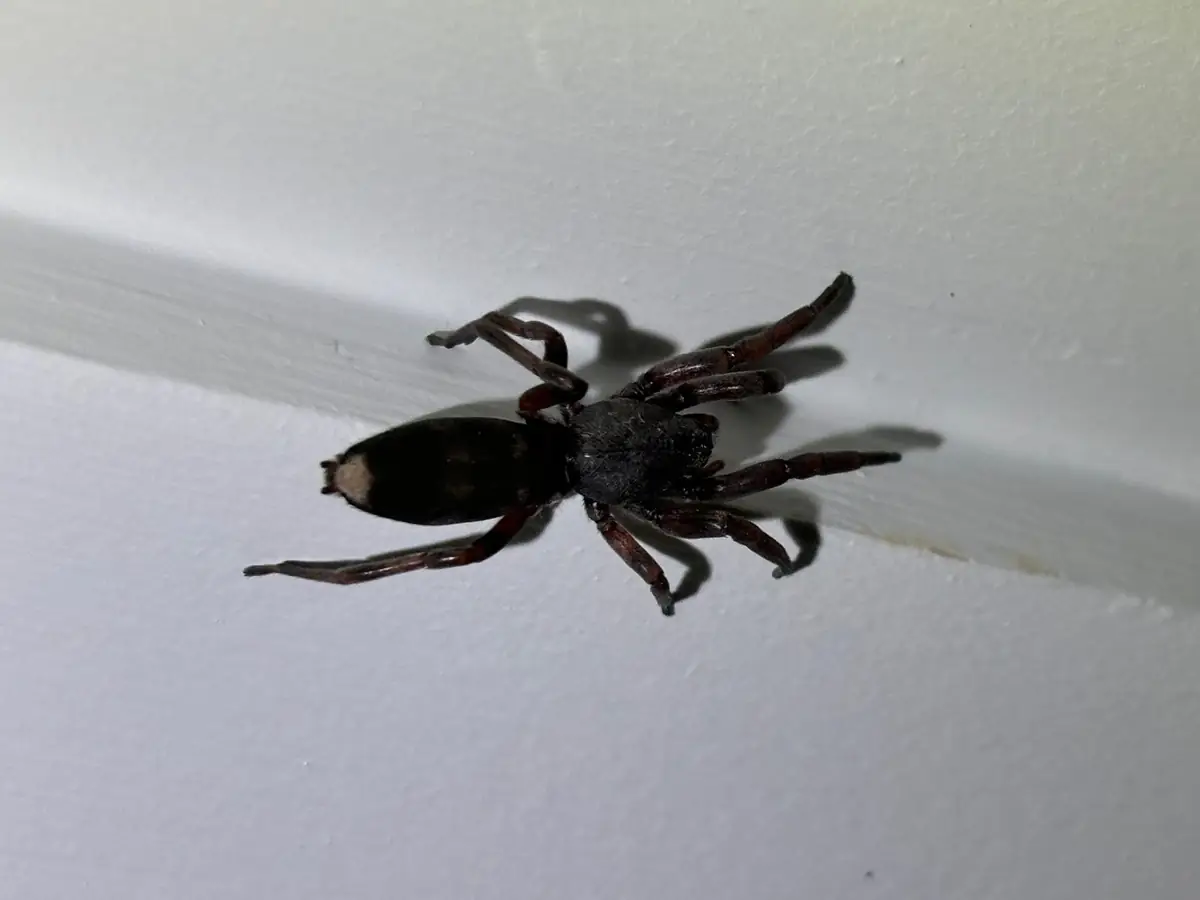
This note looks at the chain and at what breaks it. The details on how we treat exteriors are on the spider service page. For identification of the spiders themselves, see the white-tails, huntsmen and Avondale spider note.
Follow the insects
Most web builders around houses are not hunting people or pets. They are placed near flying insects. Moths, midges and small flies gather at lights at night, and they also settle in the shelter under eaves during the day. A spider that builds a web within reach of a lit surface receives a delivery every evening.
That explains the pattern you see: webs around the porch light, along the line of the soffit, in the corners of windows that face the street lamp, and across the gap between the deck and the fence where insects pass.
Which lights draw the most
Light colour matters. Many insects are drawn more to bright white and bluish light than to warm yellow or amber. We cannot offer a measured figure for your house, but swapping a cool-white outdoor bulb for a warm-white or yellow one is cheap and often reduces the insects that gather. Motion sensors, so lights are on only when needed, cut the hours of attraction. Point fixtures downward rather than sideways to reduce spill into the garden.
These are general practical steps. If your outdoor lights are required for safety, keep them, and use the warmer bulb and the sensor.
Where eaves collect trouble
Eaves are the perfect web site: a corner that is sheltered, with a fixed surface for anchors, and constant insects. In houses with deep soffits, such as many mid-century homes in Glen Eden and Kelston, webs may be several metres above ground and difficult to brush. Our reading is that older timber houses with exposed rafters offer more nooks than a newer, tightly detailed house, but we have no numbers.
Bush-edge sections add more of everything: more insects, more shelter, more spiders. The bush-edge homes page covers how the setting changes pest pressure, and a house in Titirangi or Laingholm may need more frequent cleaning than one in an open suburb.
What actually helps
- Swap and aim the lights. Warm bulbs, sensors, downward fixtures.
- Brush down regularly. A long-handled soft brush or a cobweb duster, every week or two in summer, removes egg sacs before they hatch. Take care on a ladder, and ask someone to hold it or hire a pole.
- Cut vegetation back from walls. Shrubs and vines against the cladding are bridges for insects and spiders.
- Reduce what is around the base. Firewood stacks, pot piles and stored boxes against the wall are shelter.
- Seal what you can. Gaps around joinery, vents and meter boxes keep spiders and their prey out.
- Wash the house. A gentle exterior wash in spring removes webs and egg sacs before the busy months, which means the next treatment starts from a clean surface.
What a technician adds
A technician can reach high eaves, knock down webs and egg sacs, and apply a residual product on the surfaces where spiders return. Treatments are applied to label directions, and the visit includes advice on lights, plants and gaps. The effect lasts for a period and does not stop new spiders arriving from the garden or bush. Our safety and products page explains how we handle products near pets, fish tanks, vegetable gardens and washing lines.
We say plainly that spraying is not a cure. If you only brush down webs and never change lights or gaps, the webs return. If you only spray and leave a bright white light, the insects still arrive.
Rural and orchard sections
Where there is horticulture or livestock, insects are more numerous, and so are the spiders. The Unitary Plan describes the Mixed Rural zone as often having a history of horticulture, viticulture, intensive farming and equine activities. On such land, outbuildings and sheds collect heavy webs.
The Mixed Rural zone often has a history of horticulture, viticulture, intensive farming and equine activities, and the Countryside Living zone provides for low-density rural lifestyle dwellings and farmlets.
Source: Auckland Unitary Plan, chapter H19 Rural zonesOur reading is that a lifestyle block near Kumeū or Waimauku is likely to see more insects and so more web builders, though no source measures it. The orchard and vineyard country page describes that setting.
Webs and safety
Common house web builders are not dangerous to people. If you spot a shiny black spider with a red mark in a dry, sheltered spot, such as a letterbox, a pile of timber or the base of a shed, treat it as a possible redback. Do not touch it, photograph it and tell the specialist.
If anyone is bitten and feels unwell, seek medical advice. This is general information, not medical advice.
What it costs
The following figures are estimates, checked on 17 November 2026 and not specific to West Auckland. Professional Pest Manager gives $150 to $300 for a standard exterior spider treatment and $200 to $400 for interior plus exterior. We have no verified price for web removal alone, and the specialist quotes after a look. The price guide lists the sources.
Ask for an exterior visit
Phone 09 872 7624, where an assistant takes your details for a specialist callback, or book a callback and mention the eaves, lights and how often webs return. You can see everything we cover under the main services page.
Call 09 872 7624, or book a callback and a specialist will ring you.
Call now Book a callback