Why ants come indoors after rain
Heavy rain floods nests and sends colonies looking for dry ground. What to do and what not to do in the meantime.
Published
In this note
The rain stops, the sun comes out, and by lunchtime there is a stream of ants across the laundry floor. If that sounds familiar, you have seen the other half of a wet-weather pattern: the nest outside got wet, and the colony moved.
This note covers why that happens, how it plays out in West Auckland's wetter pockets, and what helps in the first 48 hours. For the full service, see our ant treatment page.
A flooded nest is an emergency for the colony
Ants nest in soil, under paving, in wall cavities and beneath pots. Prolonged heavy rain fills those spaces with water. Workers carry eggs and larvae to higher, drier ground, and a house with a dry cavity wall, a warm kitchen and a sealed-up pantry is exactly that.
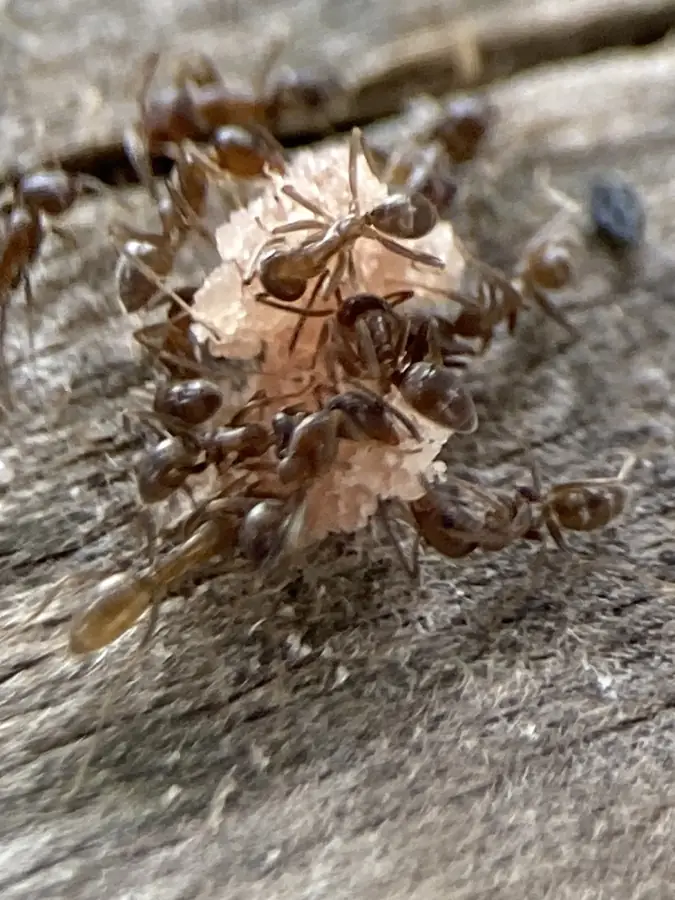
DOC notes that Argentine ants are known in many parts of Auckland and move in trails of five or more ants abreast, so a relocating colony is easy to spot. This is the same species behind the big spring trails, covered in the note on Argentine ant trails.
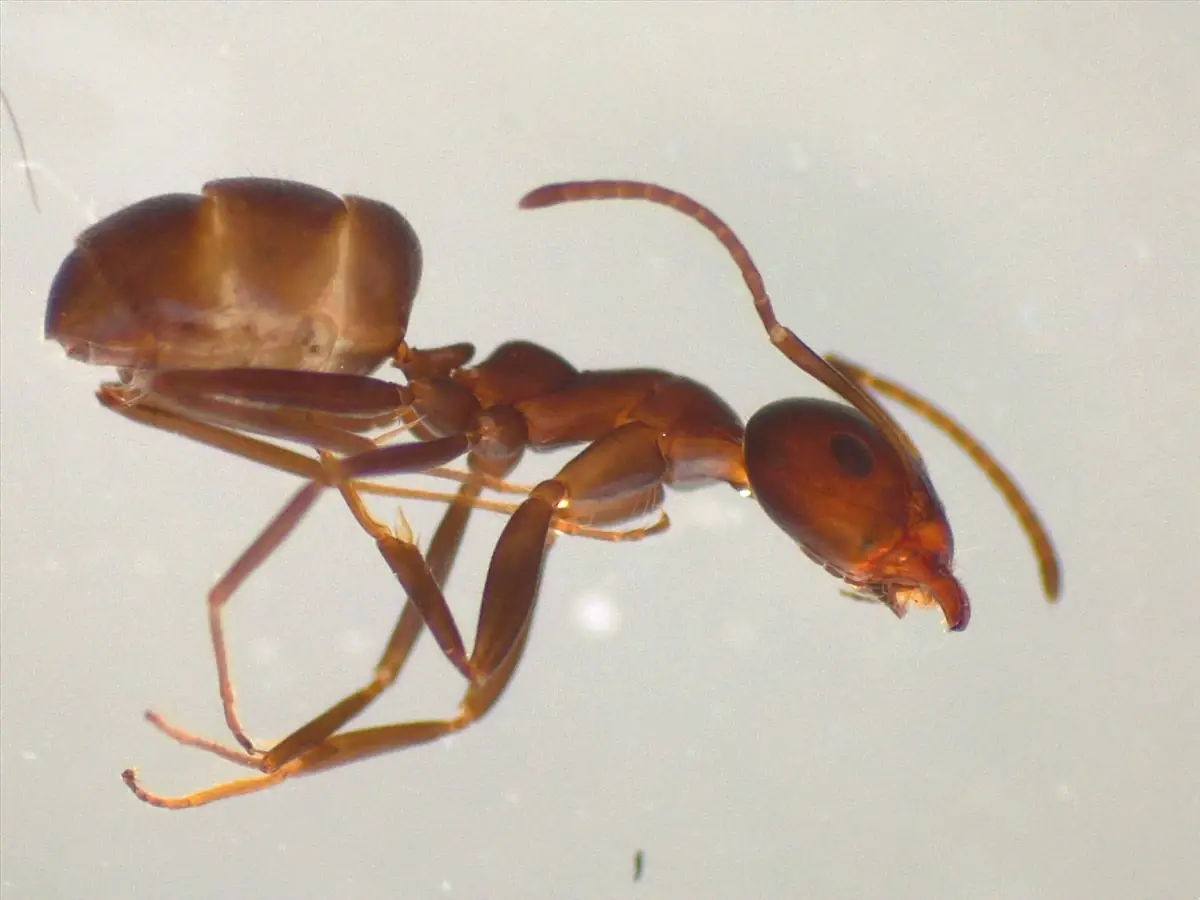
Argentine ants are known in many parts of Auckland, are 2 to 3 mm and honey-brown, and travel in trails five or more ants wide.
Source: Department of ConservationNot every wet-weather ant is Argentine. Black garden ants and others behave in the same way. The response is similar, but a photo helps the specialist choose the right bait.
How wet is West Auckland
Auckland Council's freshwater report card for the West Coast area reports a long-term mean rainfall of 1302 mm, with 1416 mm in 2017. That is a regional average that includes the Waitākere Ranges boards, so it will understate the wetter ridges and overstate the drier flats.
The West Coast reporting area, which includes the Waitākere Ranges local boards, has a long-term mean rainfall of 1302 mm, and 1416 mm was recorded in 2017.
Source: Auckland Council State of Auckland report cardSome parts of West Auckland also take the water badly. RNZ reported that the Kumeū and Huapai area has a repeated history of flooding, with the low-lying town centre the main concern, and that the Momutu Stream overflowed onto properties on Camphora Place in Rānui during the 2023 Auckland Anniversary floods.
The Kumeū and Huapai area has a repeated history of flooding, and the low-lying town centre is the main concern.
Source: RNZ, Kumeū floodingOur reading is that ground soaked this often leaves ants less room to stay put, so wet years probably send more colonies indoors. We have no counts to prove it. Suburb pages for Kumeū, Huapai and Rānui cover the flood setting for each.
The first 48 hours
Do:
- vacuum up trails, then empty the cleaner outside straight away;
- wipe the route with warm soapy water to remove the scent and any sticky food;
- keep pet bowls up and lids on;
- dry wet spots, such as a damp mat under a leak, because moisture holds them.
Don't:
- spray a heavy cloud of surface insecticide along the skirting, which can split the colony into several smaller groups;
- hose out the nest entrance and push the colony somewhere else;
- put out sugar traps in every room, since you may simply feed the workers.
If the trail is thick, a small amount of ant bait placed beside it, following label directions, gives workers something to carry back. Keep it away from children and pets, and read safety and products for how we handle it.
When it settles on its own, and when it does not
After a single storm, many ant surges fade within a few days once the soil dries. If the trail is still there after a week of fine weather, the colony has probably found a food source or a nesting spot inside the house. Look in the wall under a leaking window, below a dishwasher or in the subfloor timber.
A technician will check the outside of the house for the likely entry points. In suburbs with bush-edge sections, such as Titirangi, the surrounding garden and leaf litter give more nest sites, so expect a perimeter treatment to be part of the plan.
Drains, decks and drying out
After wet weather, three places collect colonies:
- under pavers and deck bearers, where the soil is warm and loose;
- inside garden walls and retaining blocks;
- in the gap between the slab and the cladding.
Knock soil away from the cladding where you can, keep gardens below the damp-proof course and keep the downpipe discharge away from the foundation. These changes address why ants like your house, not only the ants themselves.
Cost of a visit
The figures are estimates checked on 17 November 2026, and not specific to West Auckland. Professional Pest Manager lists a standard ant treatment at $180 to $350, and $250 to $450 or more where the problem is severe or spread across several areas. An Auckland operator publishes a starting price of $180. The specialist confirms a price in writing after seeing the property. The price guide for ants, cockroaches and spiders lists the sources.
Calling for help
If ants are still coming in after a week of dry weather, phone 09 872 7624 and an assistant will take your details for a specialist callback. You can also book a callback online. For the wider list of what we cover, go to our everything we arrange across the west page.
Call 09 872 7624, or book a callback and a specialist will ring you.
Call now Book a callback